How to Measure B2B Video Marketing ROI

How to Measure B2B Video Marketing ROI
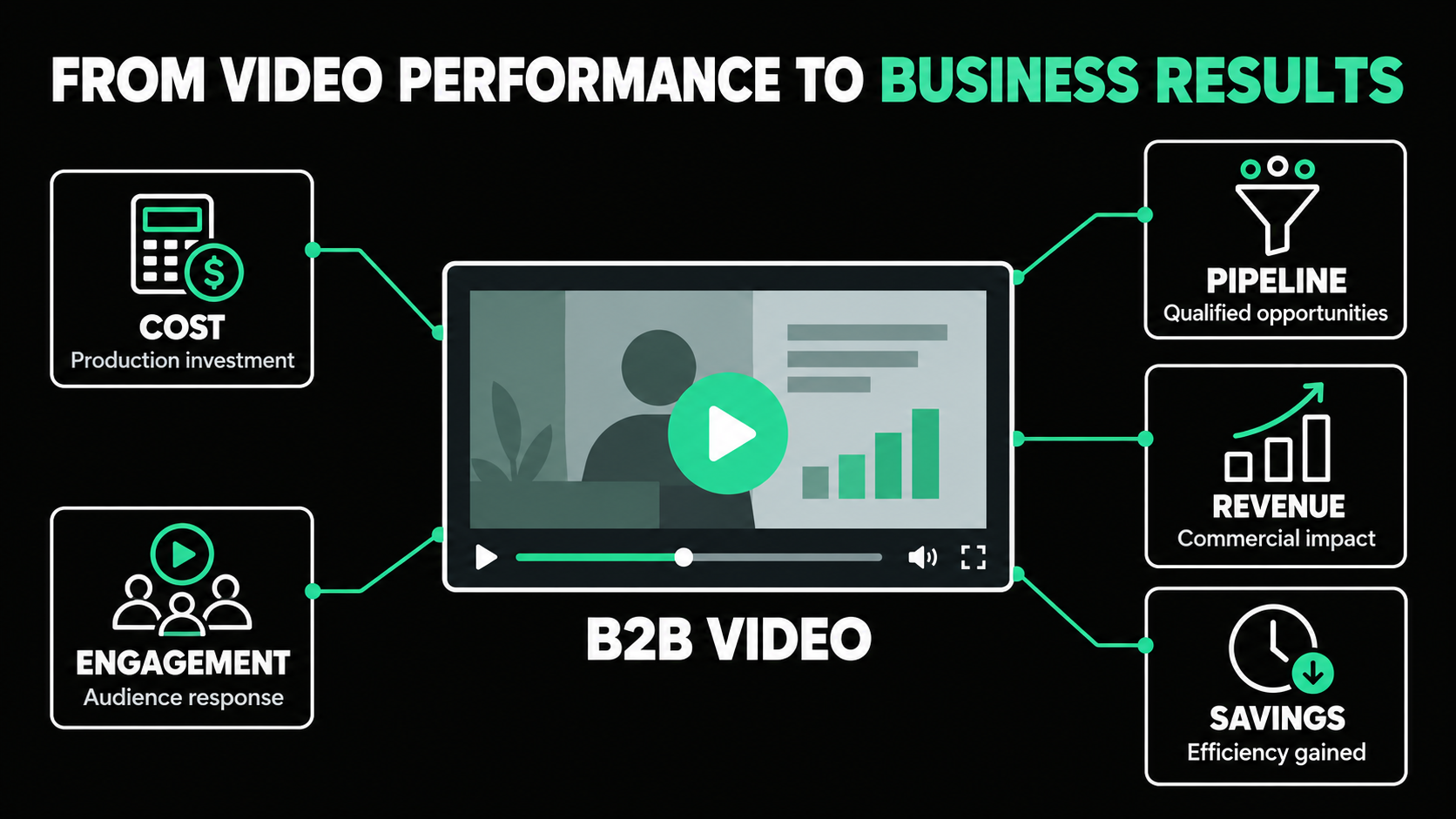
To measure video marketing ROI, connect each video to a specific business objective, track the viewer actions related to that objective, assign a financial value where possible, and compare the value created with the full cost of the video.
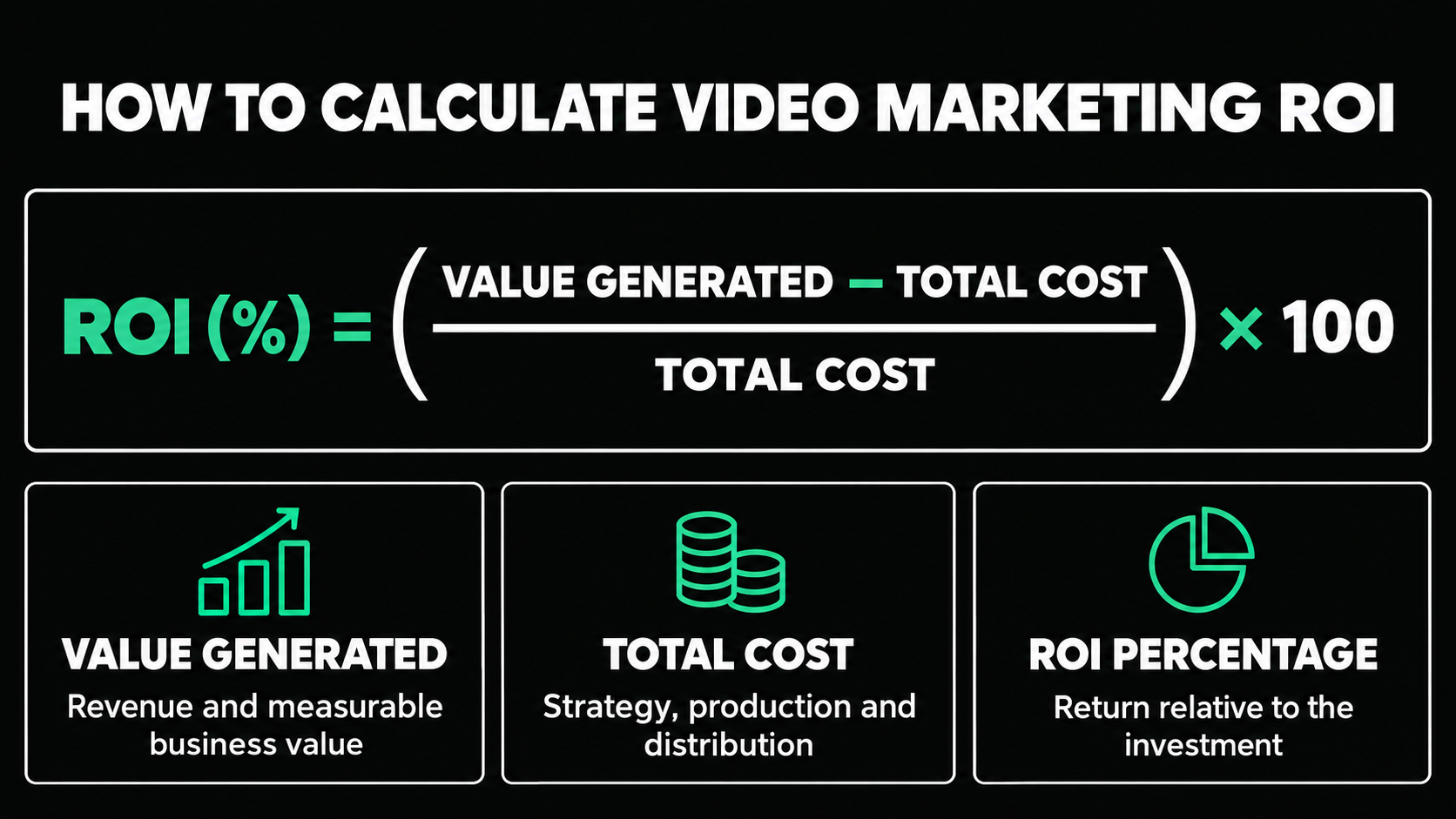
The basic formula is:
Video marketing ROI = (Value generated by video − Total video cost) ÷ Total video cost × 100
The formula is simple. The hard part is deciding what value the video created, especially in B2B marketing where sales cycles are long, several people influence the purchase, and a video may support multiple channels.
The solution is a measurement plan that matches the video’s actual job.
Why B2B Video ROI Is Difficult to Measure
A B2B buyer may watch a product video, read a case study, attend a webinar, speak with sales, and return through branded search before converting. The video contributed, but it may not receive credit in a last-click report.
Video performs different jobs across the journey. A paid video may generate leads, a product explainer may improve conversion, and an onboarding video may reduce support demand.
These assets should not be measured with one universal metric. Views and clicks indicate engagement, but they do not automatically prove value.
The correct starting point is not “How many views did we get?” It is “What business outcome was this video designed to support?”
Step 1: Define the Video’s Business Objective
Every video should have one primary objective before production begins.
Common objectives include:
- Increase awareness among a defined audience
- Generate qualified website visits
- Improve landing-page conversion
- Produce demo requests or event registrations
- Help sales explain a complex product
- Reduce a common buying objection
- Increase feature adoption
- Improve customer onboarding
- Reduce repeated support questions
A video can support more than one outcome, but one objective should determine the main success measure.
A paid ad should be judged by relevant reach, qualified traffic, and assisted conversions. An implementation video used by sales should be judged by usage and influence on active opportunities.
If the objective is vague, the ROI calculation will also be vague.
Step 2: Match Metrics to the Buyer Journey
The useful metrics change according to where the video is used.

This prevents a common reporting problem: asking a top-of-funnel video to prove immediate revenue or celebrating a late-stage sales video because it received many views.
Engagement metrics
Useful engagement measures include:
- Play rate
- Average watch time
- Percentage watched
- Completion rate
- Rewatches
- Clicks on the video call to action
- Drop-off points
Google Analytics can collect video_start, video_progress, and video_complete events through enhanced measurement for embedded YouTube videos. Its progress events are recorded at 10%, 25%, 50%, and 75% of the video duration. Google Analytics enhanced measurement documentation
Interpret engagement in context. Wistia’s 2026 research, based on more than 13 million videos, notes that shorter videos generally have higher engagement rates, while longer videos can produce more total watch time. Wistia 2026 State of Video Report
Conversion metrics
Conversions show whether viewers took a meaningful next step. Depending on the campaign, that may include:
- Booking a meeting
- Completing a lead form
- Registering for an event
- Starting a trial
- Downloading a resource
- Visiting a pricing or product page
- Replying to a sales email
Define conversions before launch. A demo request may be primary, while a product-page visit is a useful secondary signal.
Revenue and pipeline metrics
For revenue-focused videos, track:
- Video-sourced leads
- Video-influenced opportunities
- Pipeline value
- Closed-won revenue
- Average deal size
- Win rate among viewers
- Sales-cycle length among viewers
These metrics require video engagement data to connect with CRM records. Without that connection, neither marketing nor sales sees the complete journey.
Step 3: Calculate the Full Cost of the Video
An accurate video ROI calculation requires more than the production invoice.
Include the costs of:
- Strategy and discovery
- Concept development and scripting
- Internal staff time
- Filming, animation, and editing
- Travel, locations, talent, and equipment
- Music, stock assets, and voice-over
- Captions and localization
- Video hosting and analytics tools
- Paid distribution
- Landing-page or campaign development
- Future updates and additional versions
If one shoot produces six videos, allocate shared costs consistently across the assets. You might divide them equally or assign more to the primary asset.
Include a reasonable estimate of time spent by product, legal, marketing, and other internal reviewers.
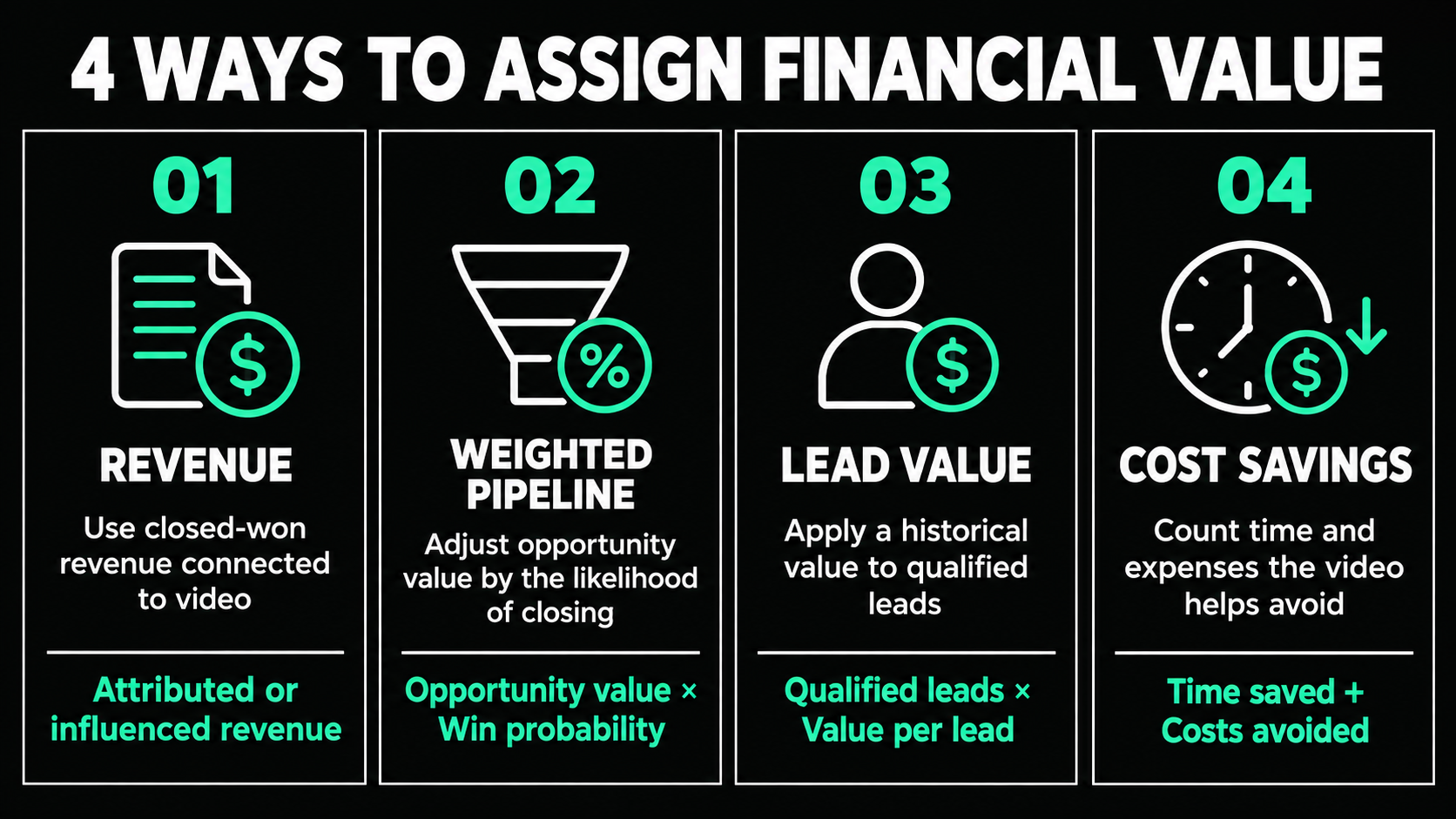
Step 4: Assign Financial Value to the Outcome
The easiest calculation is direct revenue from tracked conversions. Most B2B programs need a broader method.
Revenue generated
If a campaign generated $80,000 in attributable gross profit and cost $20,000, the calculation is:
($80,000 − $20,000) ÷ $20,000 × 100 = 300% ROI
Use gross profit instead of revenue when delivery costs are significant.
Pipeline generated or influenced
Pipeline is not revenue. If a video influenced $500,000 in open opportunities, do not report $500,000 as return.
Apply a historical close rate when useful. If similar opportunities close at 20%, the expected value is $100,000. Label it weighted pipeline, not realized revenue.
Lead value
When revenue data is unavailable, estimate the expected value of a qualified lead:
Lead value = Lead-to-customer conversion rate × Average customer value
If 5% of qualified demo requests become customers and the average gross profit per new customer is $20,000, one qualified demo request has an expected value of $1,000.
Use this method only with reliable internal data.
Cost savings
Customer education and sales enablement videos may create value by reducing work.
An onboarding video may reduce live training sessions. Estimate the hours saved, multiply them by a reasonable hourly cost, and subtract ongoing maintenance expenses.
Document all cost-saving assumptions.
Step 5: Choose an Attribution Method
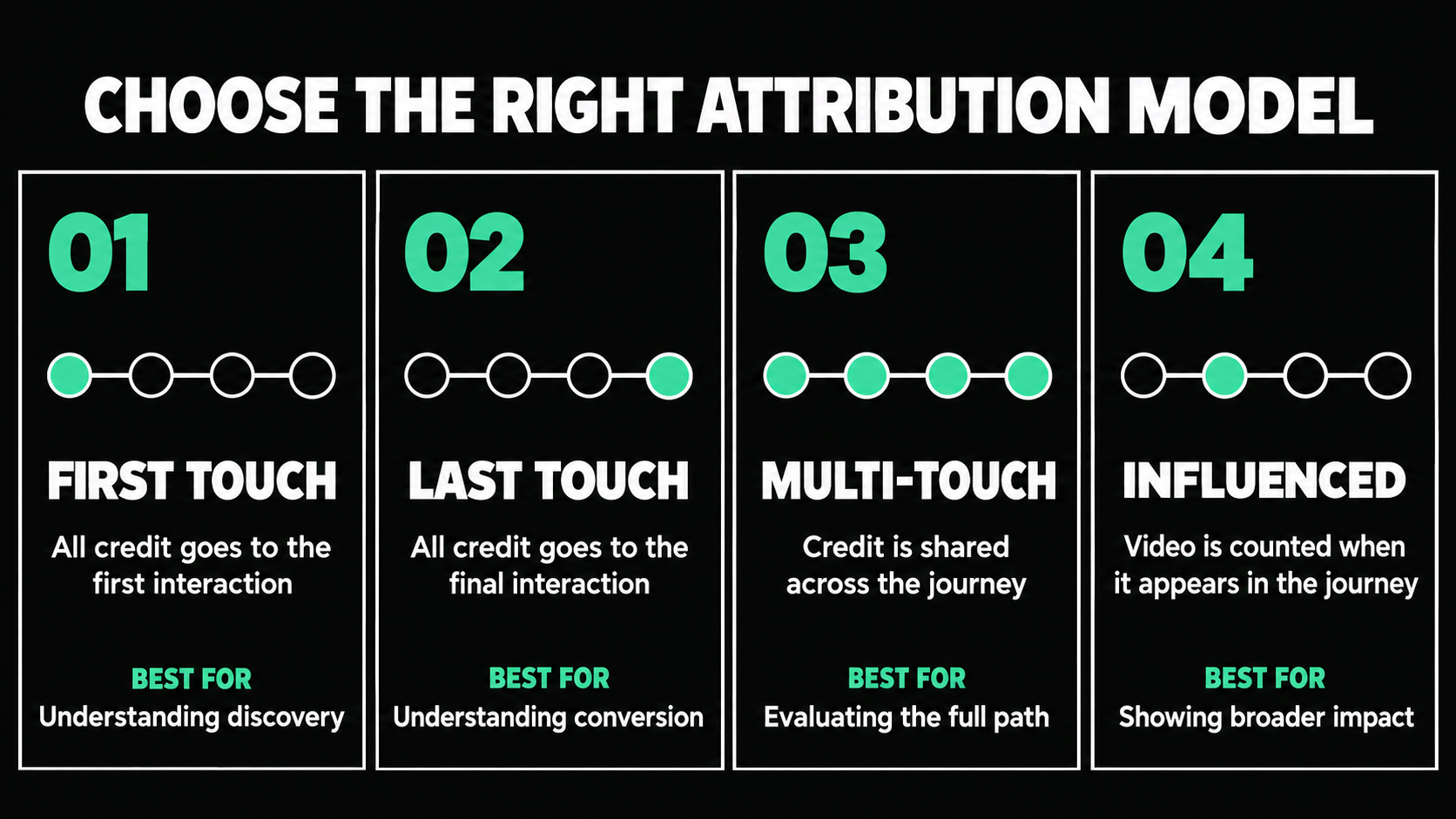
Attribution is the method used to decide which marketing interactions receive credit for a result.
First-touch attribution
First touch credits the first recorded interaction. It shows whether video introduced prospects but ignores later activity.
Last-touch attribution
Last touch credits the final interaction before conversion but undervalues earlier video engagement.
Multi-touch attribution
Multi-touch models share credit across interactions. They reflect B2B journeys better but require clean tracking and agreed rules.
Influenced attribution
Influenced attribution asks whether a person or account watched before an opportunity or sale. It suits content that assists rather than originates demand.
Use sourced and influenced views when possible. Explain the rules and apply them consistently.
Step 6: Build the Measurement Plan Before Production
Tracking should be designed alongside the video strategy.
Before launch, document:
- The primary objective
- The intended audience
- The distribution channels
- The primary and secondary metrics
- The conversion action
- The attribution method
- The reporting period
- The data owner
Then prepare the required tracking. This may include UTM parameters, platform pixels, campaign-specific landing pages, CRM campaign membership, video-player events, call-to-action tracking, and consistent campaign names.
For paid distribution, conversion tracking should capture meaningful website actions after ad interaction. Google Ads supports website conversion measurement for actions such as sign-ups and other completed website activities. Google Ads conversion measurement documentation
Before launch, test the video, events, links, forms, and CRM campaign data.
Step 7: Evaluate the Full Asset System
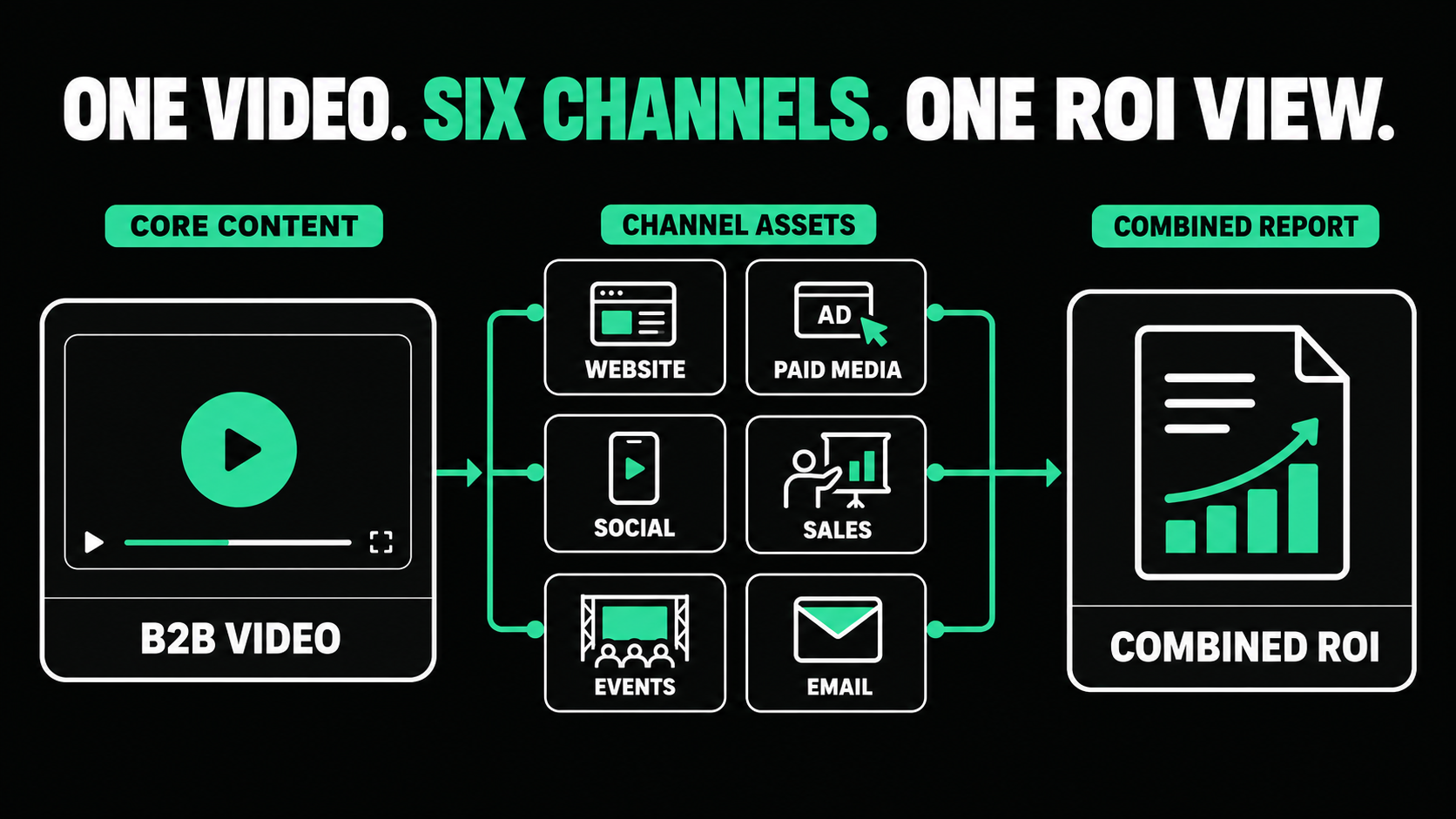
One concept may support a product page, paid advertisements, social posts, sales outreach, events, and email campaigns.
Evaluate the main video and planned cutdowns together, while tracking each asset by channel. Otherwise, reporting may understate the return from the original production.
How to Report B2B Video Marketing ROI
A useful report should include:
- The video’s objective and audience
- Total production and distribution cost
- Where the video was used
- Reach and engagement
- Primary conversions
- Sourced and influenced pipeline
- Realized revenue or estimated value
- Key assumptions
- Lessons and recommended next action
Report closed-won revenue, weighted pipeline, and estimated savings on separate lines.
If viewers watched but did not convert, investigate the offer, call to action, landing page, audience, and placement.
Common Video ROI Measurement Mistakes
- Measuring every video by views instead of its objective
- Setting up tracking after the campaign has launched
- Claiming that video created all influenced revenue
- Ignoring private use by sales and customer teams
- Excluding planned cutdowns from the ROI calculation
Measure the Business Job, Not Just the Video
The best answer to how to measure video marketing ROI is to begin before production. Define what the video should accomplish, where it will be used, what action it should generate, and how that action will be tracked.
Calculate the full investment, assign value conservatively, and report direct and influenced outcomes. Video may produce revenue, improve conversion, support sales, or reduce cost.
The goal is not to force every video into the same ROI formula. It is to create a credible connection between the video’s purpose and the business result it was designed to support.
Need a video strategy built around measurable business outcomes, not just production deliverables?
Spacebar Visuals helps B2B teams define the objective, audience, distribution plan, production approach, and measurement framework before the cameras or animation work begins.
Book a video strategy call to discuss what your video should accomplish and how its performance can be measured.
Let’s build your product story together


View Related Resources

8 B2B Customer Testimonial Video Examples That Work
How to Create a B2B Customer Testimonial Video
