8 B2B Customer Testimonial Video Examples That Work

8 B2B Customer Testimonial Video Examples That Work
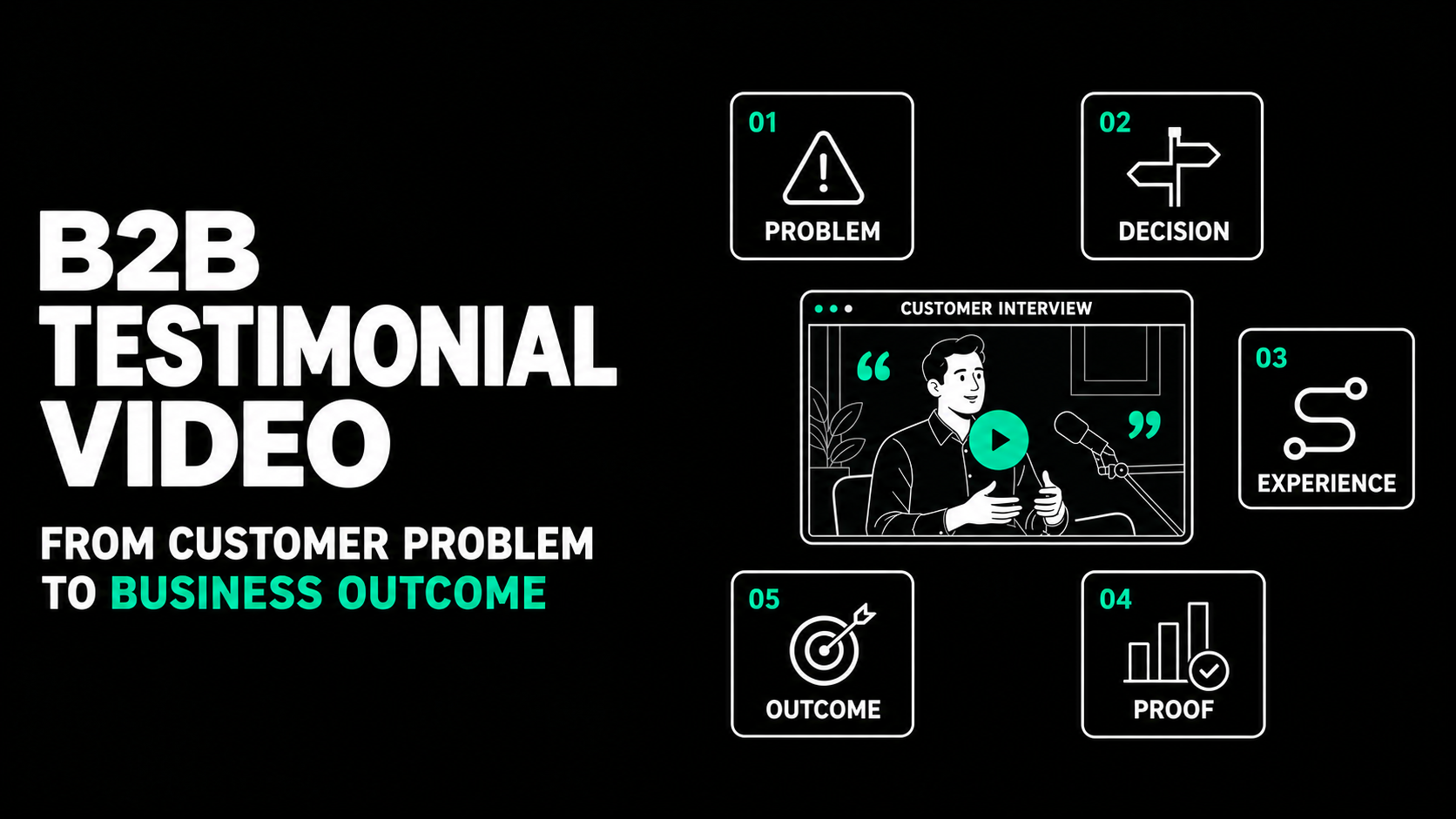
The best customer testimonial video examples do more than place a satisfied customer in front of a camera. They build a clear story around a recognizable problem, a meaningful decision, the customer’s experience, and credible evidence of change.
For B2B marketers, a strong testimonial should answer a question that may be slowing the buyer down. Can the product handle a complex organization? Is implementation manageable? Will users adopt it? Can the vendor support the account? Does the product create measurable value?
The eight examples below use different creative approaches, but each gives the customer a clear role in proving the message. All examples come from public customer-story pages maintained by the companies featured.
What Makes a B2B Testimonial Video Effective?
An effective B2B customer testimonial video needs relevance, specificity, and a clear business purpose.
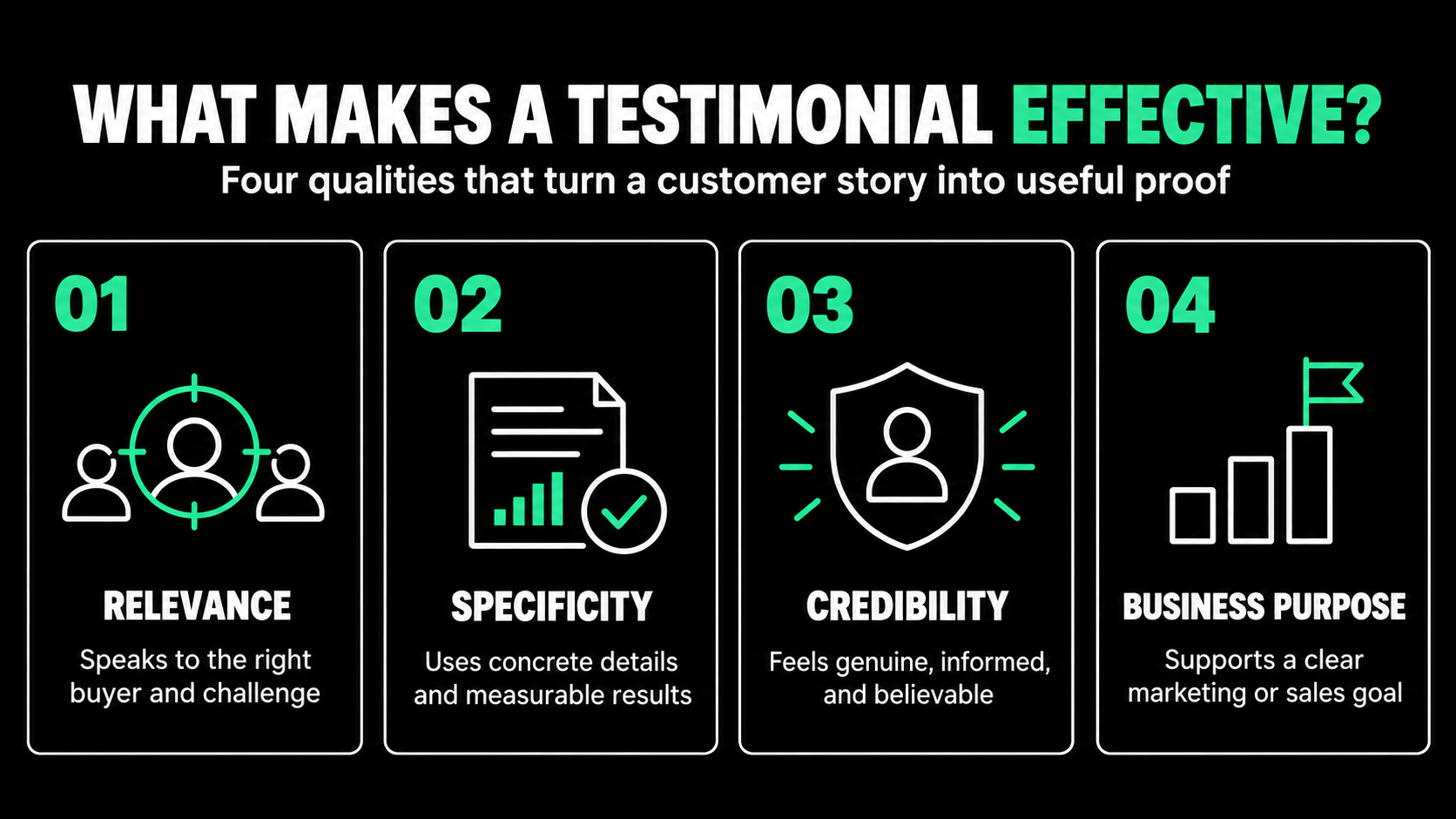
The customer should resemble the intended buyer in a meaningful way, whether through industry, role, company size, use case, or business challenge. Their story should include enough detail to feel real, but it should not become a complete company history.
The video also needs a job. A homepage testimonial may introduce trust quickly. A sales-enablement story may address an implementation objection. An industry campaign may show that the product works under specific operating conditions.
Production quality matters, but credibility matters more. Buyers are more likely to remember a precise explanation of what changed than a cinematic montage supported by vague praise.
1. Docebo and Zendesk: Lead With a Clear Business Transformation
Zendesk’s Docebo customer story focuses on a substantial operational change. Docebo replaced a fragmented support technology stack with a more unified approach using Zendesk AI.
The strength of this example is its business framing. The story is not presented as a list of product features. It connects the technology to support operations, automation, efficiency, and cost. The customer page also supports the video with specific approved results, giving a serious buyer evidence to review after watching.
The lesson for B2B marketers is to identify the transformation before filming. “The customer likes our platform” is not a story. “The customer replaced a complex process and changed how the team operates” gives the interview a useful direction.
This approach works particularly well for enterprise software, services, and technology consolidation stories where the value extends across several teams.
2. FreshBooks and Zendesk: Use a Recognizable Operational Problem
FreshBooks’ Zendesk customer video centers on a problem many growing companies recognize: supporting customers across channels while helping service teams work efficiently.
The story benefits from a speaker with direct responsibility for customer experience. That role gives the audience confidence that the comments come from someone close to the operation, not a spokesperson with limited product contact.
The broader lesson is to choose the interview subject based on the claim the video must prove. If the story is about user adoption, interview someone responsible for the users. If it is about executive value, include the leader accountable for the outcome. Job title alone is less important than first-hand knowledge.
FreshBooks also shows why a testimonial should focus on a real operational tension. Buyers can recognize the challenge before they understand every detail of the solution.
3. Deliveroo and Zendesk: Connect Internal Tools to the End Customer
Zendesk’s Deliveroo customer video links support technology to the experience of riders and, ultimately, the customers ordering food.
This creates a stronger story than describing a service platform in isolation. The product supports an internal team, but the impact travels through the business to people outside that team.
B2B marketers can apply this structure by tracing the chain of value. A workflow tool may help employees respond faster. Faster response may help customers solve problems sooner. That experience may then support retention or trust.
The interview should not claim every downstream result without evidence, but it can show why the internal improvement matters. This is useful for infrastructure, operations, customer experience, and back-office products whose value is not always visible on screen.
4. TravelPerk and Zendesk: Build the Story Around Scale
TravelPerk’s Zendesk customer story shows how a growing business uses AI and customer-service technology to support its operation.
Scale is a strong testimonial theme because it addresses a common B2B concern: whether the solution will continue working as volume, teams, and customer expectations increase.
The useful creative choice is to make growth part of the tension. The story can begin with what became difficult as the business expanded, then show how the customer changed its approach. This is more persuasive than describing scale as a general product benefit.
For your own video, ask the customer what stopped working as the business grew. Their answer may reveal a stronger opening than asking what they like about the product.
5. Knight Frank Asia Pacific and HubSpot: Use Regional and Role Relevance
HubSpot’s Asia-Pacific customer video library includes a story featuring Knight Frank Asia Pacific and its marketing leadership.
The example is valuable because the customer, role, and region immediately signal relevance. A marketing leader in a complex regional organization can speak to reporting, automation, customer communication, and coordination in language that another B2B marketing team understands.
This demonstrates why customer selection is part of content strategy. A recognizable logo may attract attention, but a closely matched role and use case often create more persuasive proof.
If a company sells to several industries or regions, it may need a portfolio of customer stories rather than one flagship video. Each story can address the language, process, and concerns of a priority segment.
6. New Breed and HubSpot: Let a Peer Explain the Working Relationship
New Breed’s HubSpot customer success story uses a peer-led account of the customer journey.
This type of story is effective when the service relationship matters as much as the platform. Buyers considering a long-term B2B partner want to know what collaboration feels like after the initial sale.
The lesson is to include experience questions, not only outcome questions. Ask what implementation was like, how problems were handled, what surprised the customer, and how the relationship developed. These answers can reduce perceived risk, especially for complex services or products with significant onboarding.
A credible description of the working relationship often supports sales better than a string of general compliments. It helps the buyer imagine what becoming a customer will actually involve.
7. Monster Energy and Adobe: Support the Interview With a Visually Rich Environment
Adobe’s Monster Energy customer story has a natural visual advantage. The customer operates across action sports, events, travel, and a high volume of video production.
The supporting footage helps viewers understand the scale and pace of the creative operation. The environment is not decorative. It provides context for the collaboration and review challenges discussed in the story.
B2B teams with less visually dramatic products can still use the same principle. Film the people, systems, locations, and processes connected to the customer’s work. For software, combine the interview with product screens and real workflows. For professional services, show the working sessions, deliverables, and environments where decisions happen.
The goal is not to make every testimonial cinematic. It is to give the customer’s words visual evidence.
8. IBM and Adobe: Make Complexity Understandable
Adobe’s IBM customer story addresses a large marketing transformation involving platforms, content, data, and global operations.
The example shows how a testimonial can cover enterprise complexity without becoming a technical presentation. It connects the transformation to concrete operating changes, then supports the story with approved figures and written context on the page.
This combination matters. The video provides the human explanation, while the surrounding page gives buyers more detail, products used, and measurable outcomes. The testimonial does not need to carry every fact by itself.
B2B marketers should plan the video and written case study together. The video can create understanding and trust. The page can hold the technical depth, evidence, and links needed during evaluation.

What These Customer Testimonial Video Examples Have in Common
The best examples vary in length, visual style, and industry, but they share several strategic choices.
First, the story is organized around change. The customer explains what was difficult, why action became necessary, what the experience involved, and what improved.
Second, the speaker has relevant authority. They understand the process or outcome being discussed. A strong interview subject does not need to be the most senior person available.
Third, the video uses specificity. Operational detail, approved results, product moments, and real environments make the customer’s account easier to believe.
Finally, the video is supported by distribution. The strongest examples sit within customer-story libraries or detailed pages rather than existing as isolated uploads. That makes them easier to find, use in campaigns, and share during sales conversations.
Four Creative Approaches Worth Borrowing

The outcome-led story
Open with the most important change, then explain how the customer reached it. This works when the approved outcome is specific and closely tied to a buyer concern.
The problem-to-process story
Begin with the old workflow and follow the customer through the decision and implementation. This is useful when buyers worry about complexity or disruption.
The people-and-environment story
Use the customer’s workplace, team, and daily activity to make the story tangible. This is especially useful for operational, manufacturing, logistics, creative, and field-service customers.
The executive-and-user story
Combine two perspectives when both are necessary. An executive can explain the business case, while a daily user shows how the product changes the work. Avoid adding speakers who repeat the same point.
How to Choose the Right Customer for Your Video
The best customer is not always the biggest logo. Choose someone whose story answers a real market question.
Look for a clear before-and-after situation, a relevant use case, an informed speaker, approved evidence, and a customer willing to participate in the review process. Confirm permissions, distribution rights, and claim approvals before production begins.
The U.S. Federal Trade Commission’s endorsement guidance states that testimonials should reflect honest opinions and should not be misleading. Material relationships should be disclosed when they could affect how an audience evaluates the endorsement. FTC guidance on endorsements and testimonials
Do not pressure the customer to repeat marketing language. Prepare them through a pre-interview, share themes rather than scripted answers, and ask open questions that produce specific examples.
Turn One Customer Interview Into a Content System
A customer story should be planned as more than one final video.
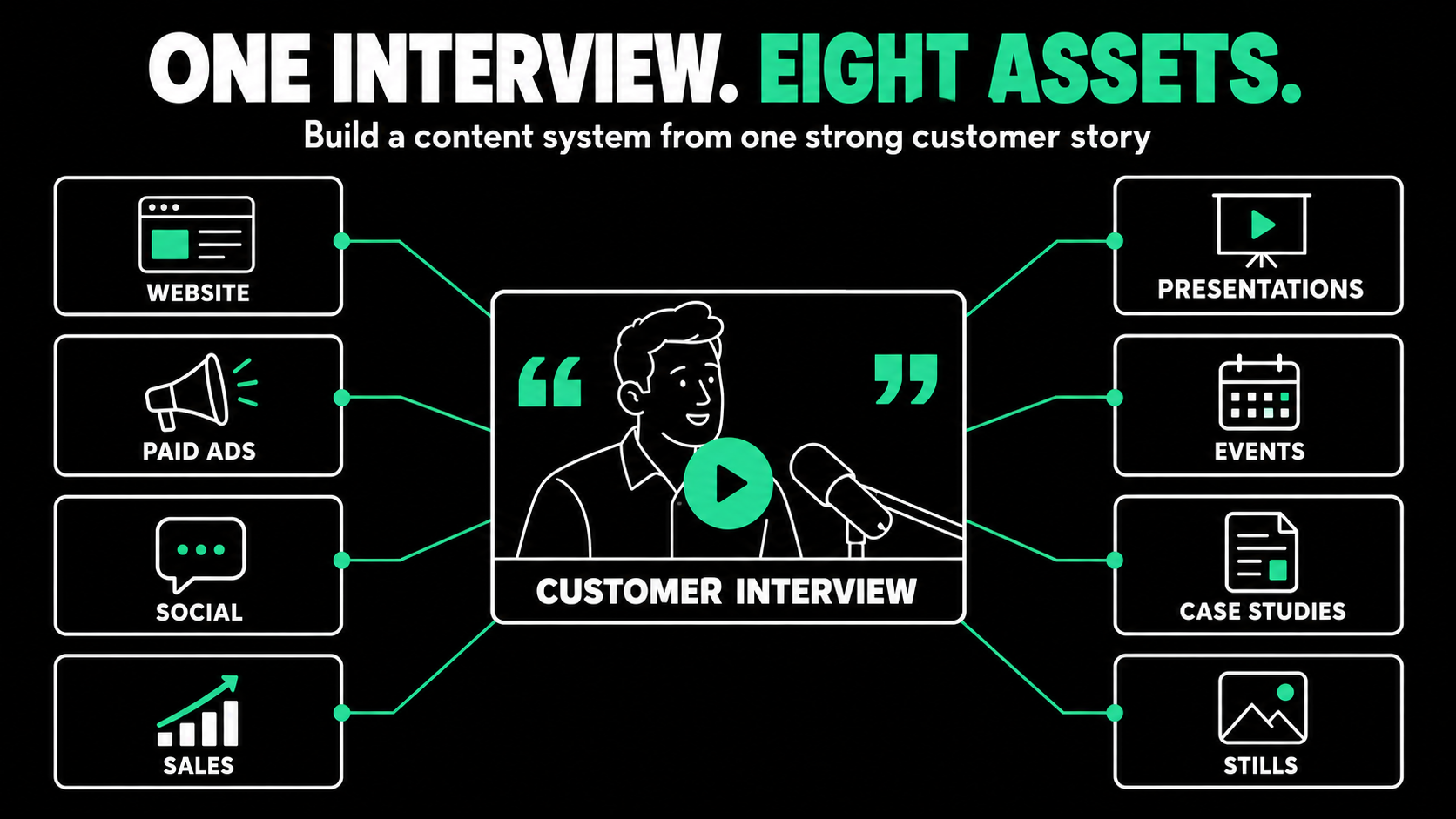
One interview can support a two-minute main story, shorter proof-point clips, industry landing pages, paid ads, organic social posts, sales outreach, presentations, event screens, written case studies, quotes, and still images.
Repurposing works best when planned before filming. Capture complete answers, alternate openings, workplace footage, product screens, vertical-friendly compositions, and several calls to action. Secure usage rights for the intended channels at the beginning.
Each edit should have a distinct role. A paid ad may lead with the problem. A sales clip may address implementation. A landing-page version may combine the customer’s outcome with a relevant call to action.
How to Evaluate a Testimonial Video Concept
Before production, ask five questions: Who is the buyer? Which concern should the customer resolve? Why is this customer qualified to address it? What evidence can be approved? Where will the story be distributed?

If the answers are vague, the project is not ready to film. A strong production team can improve the interview and visuals, but it cannot create a credible business story from missing substance.
Spacebar Visuals approaches testimonial production through the objective, audience, distribution plan, and buyer journey. The aim is to produce a useful proof asset, then extend the strongest material across marketing and sales channels.
Have strong customer stories but need help choosing the right angle, interview structure, and production approach?
Spacebar Visuals helps B2B teams plan and produce customer testimonial videos for demand generation, product marketing, sales enablement, events, and brand awareness.
Book a video strategy call to discuss your customers, buyer questions, distribution plan, and opportunities to repurpose each story.
Let’s build your product story together


View Related Resources
How to Create a B2B Customer Testimonial Video

How to Create a SaaS Product Video