How to Create a B2B Customer Testimonial Video

How to Make a B2B Testimonial Video That Builds Trust
To create an effective B2B testimonial video, choose a customer whose story matches a real buyer concern, define the business point the video must prove, and interview them in a way that produces specific, natural answers. Support the interview with product footage, workplace visuals, and verified evidence, then edit the story around the customer’s experience rather than your company’s sales message.
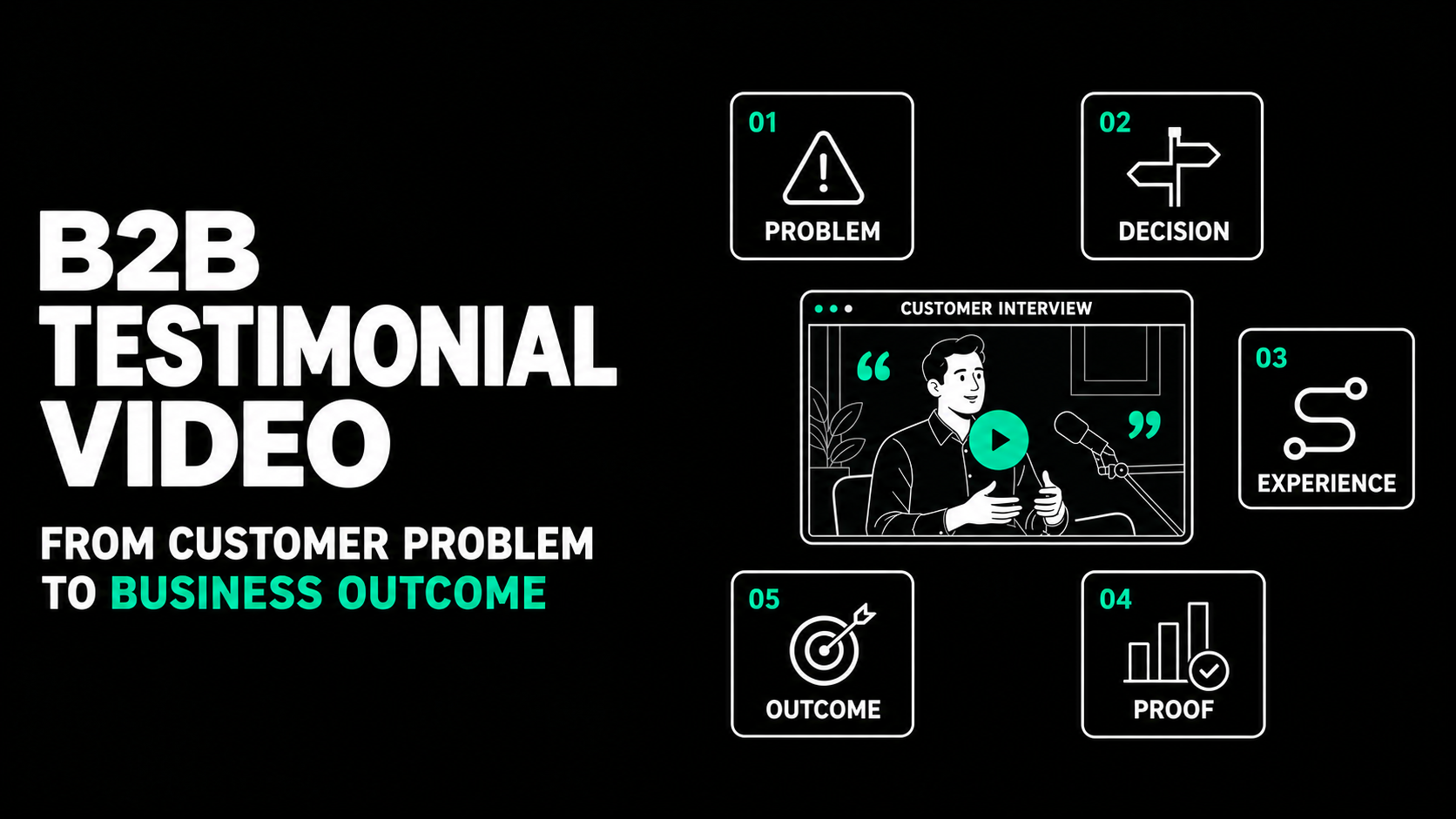
The strongest testimonials do not sound like endorsements written by marketing. They show a credible person describing a recognizable problem, the decision process, the experience of using the product, and the change that followed.
What Is a B2B Customer Testimonial Video?
A B2B customer testimonial video is a customer-led story about using a company’s product or service. It usually combines an interview with supporting footage, product visuals, titles, and evidence such as approved results or process improvements.
The customer is the main voice, and the goal is not to explain every feature. The video shows why they needed a solution, what the experience was like, and what changed.
The format is useful because B2B decisions involve risk. Buyers want evidence that the product can work in an organization like theirs and that the vendor can support the relationship after the contract is signed.
Start With the Business Question the Video Must Answer
Do not begin by asking which customer is easiest to film. Begin with the question your market needs answered.
Buyers may worry about enterprise complexity, implementation, security, adoption, integration, or measurable value. Sales may repeatedly hear the same objection late in the process.
Choose one primary question. A testimonial about fast implementation should not also try to prove every feature and use case.
A practical brief might read:
This video will help operations leaders see how a company like theirs moved from a manual process to a more controlled workflow, so they feel confident booking a tailored demo.
That sentence gives the interview and edit a clear job.
Choose the Right Customer Story
The largest customer or most recognizable logo is not always the best choice. A useful story needs relevance, substance, and a willing participant.
Look for a customer whose starting problem resembles the target buyer’s concern. They should explain the situation, decision, and working relationship clearly. A thoughtful customer with detail is more useful than enthusiastic but vague praise.
Confirm that the customer represents a priority audience and that important claims can be approved. A story built around confidential figures may become difficult to publish if legal review starts too late.
The ideal participant does not need to be a polished speaker. They need direct experience and enough detail to make the account credible.

Secure Approval Before Production
B2B customer stories often involve several approval layers. The interview subject may agree while their communications, legal, compliance, or leadership team still needs to review the project.
Before scheduling, confirm who can approve participation, logo use, filming, performance claims, the final edit, distribution channels, paid advertising, and usage period.
Agree on the review process in writing. Clarify whether the customer approves factual accuracy, the complete edit, or both. This prevents late restrictions or removed claims.
Testimonials also need to remain truthful. The U.S. Federal Trade Commission states that endorsements must reflect honest opinions and must not be misleading. Material connections should be disclosed when they could affect how an audience evaluates the endorsement. FTC guidance on endorsements and testimonials
Prepare the Customer Without Scripting Them
A customer should understand the conversation before filming, but should not sound rehearsed.
Share the themes, interview length, filming plan, and sample topics. Explain that they do not need to memorize answers and that restarts are normal.
Avoid sending a word-for-word script for the customer to deliver. Scripted praise usually sounds like scripted praise. It can also produce language that reflects your positioning rather than the customer’s actual experience.
Instead, hold a short pre-interview to confirm the timeline, identify useful details, hear the customer’s natural language, and flag claims requiring verification.
Ask Questions That Produce a Story
Good interview questions invite complete answers. They do not ask the customer to agree with a claim.
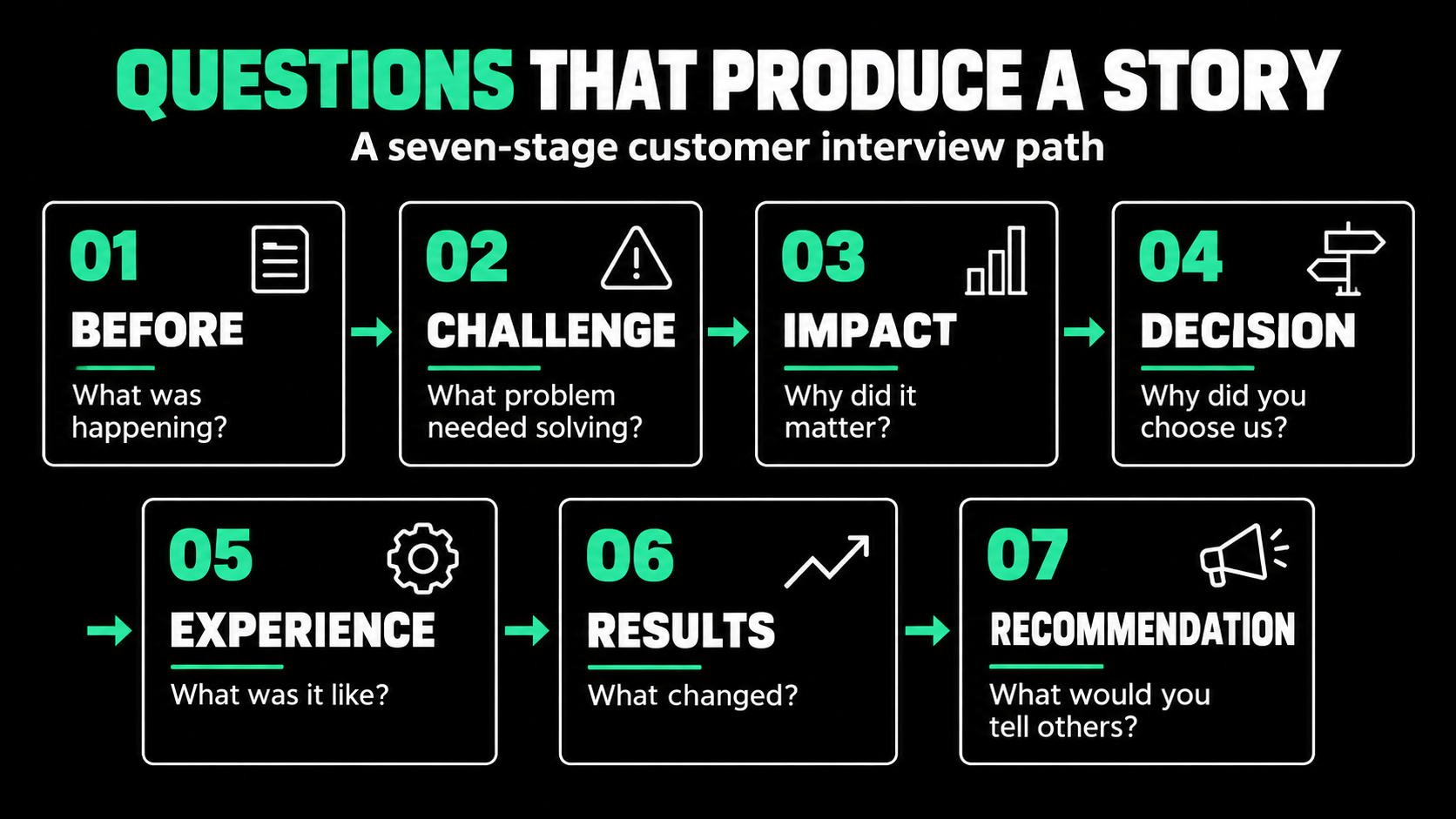
When an answer is broad, ask, “Can you give an example?” or “What did that change for the team?”
Avoid questions such as, “Would you agree that our support was excellent?” They lead the speaker toward your language and reduce credibility.
Structure the Testimonial Around Change
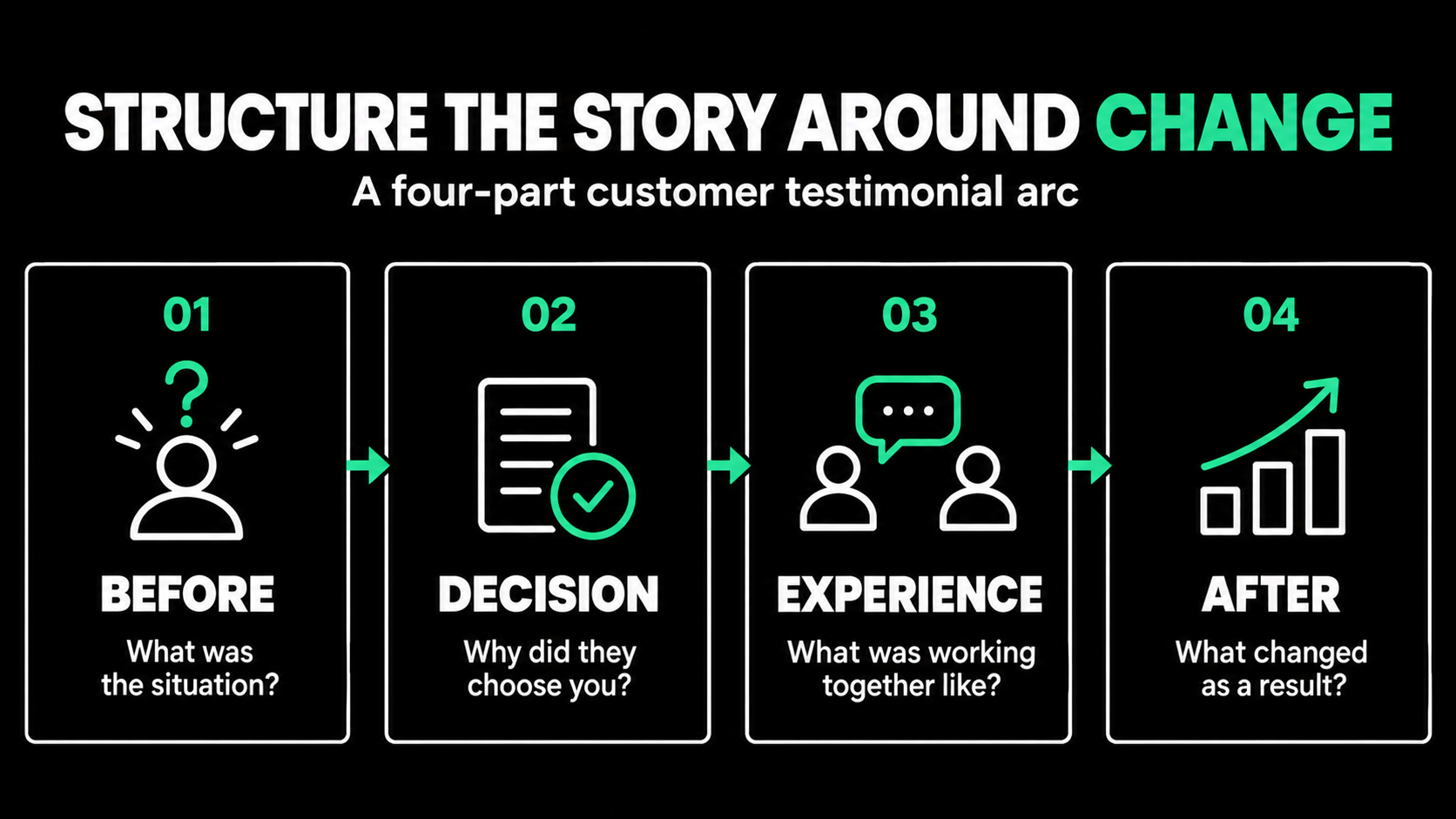
A strong testimonial video has a beginning, middle, and end. It should not feel like several positive comments placed next to one another.
Begin with what was difficult, slow, risky, or limiting. Then explain why the team acted and what it needed from a solution.
The middle covers the decision and experience. Include the parts of implementation, collaboration, or product use that address buyer concerns.
End with the change. Use approved evidence where available, but do not force a dramatic number into every story. Process, visibility, adoption, or confidence can be meaningful when explained specifically.
The company being promoted should support the story, not become its hero. The customer is the person who recognized a problem, made a decision, and created change.
Plan the Visual Story Before Filming
An interview alone can provide strong content, but a useful customer testimonial video needs visuals that help the viewer understand the environment and experience.
Plan footage based on the story: the customer at work, team collaboration, the workplace, relevant equipment, product screens, or the process in action.
For a software story, capture interface moments that support the customer’s claims. If they discuss improved reporting, show the relevant reporting experience. If the story focuses on field operations, include the people and setting where the work happens.
Avoid generic footage. Visuals should make the story more specific, not merely cover edits.
Create a Comfortable Interview Environment
The interview subject is not a professional presenter, and the set should not make them feel like one.
Use a quiet location with a clean background. Position the interviewer near the camera for a natural conversation, and explain the process before recording.
Good sound matters more than an impressive location. Viewers will tolerate a simple background, but poor audio quickly makes a video feel unprofessional. Monitor room noise, air-conditioning, traffic, notifications, and office interruptions.
Begin with easy factual questions before moving deeper. If an answer feels formal, ask again in simpler language.
Edit for Credibility, Not Maximum Praise
The best edit is not the one containing the most compliments. It is the one that makes the customer’s experience easy to follow and believe.
Remove repetition, jargon, and side stories. Keep enough natural phrasing and context that the customer’s meaning is not distorted.
Use titles for identification and verified proof points. Product footage and workplace visuals can clarify the story. Music and graphics should not compete with the interview.
Add accurate captions. W3C accessibility guidance calls for captions on prerecorded synchronized media with speech and meaningful audio. Captions also make the video easier to use in social feeds, events, and work environments where viewers may watch without sound. W3C guidance on prerecorded captions
How Long Should a B2B Testimonial Video Be?
Most customer stories should be as short as possible while still making the outcome credible. A focused main video often lands between 90 seconds and three minutes. A complex case study may need more time when the audience expects detail.
Do not remove the problem, decision, or evidence simply to reach an arbitrary runtime. Without those elements, the video becomes a collection of praise rather than a persuasive story.
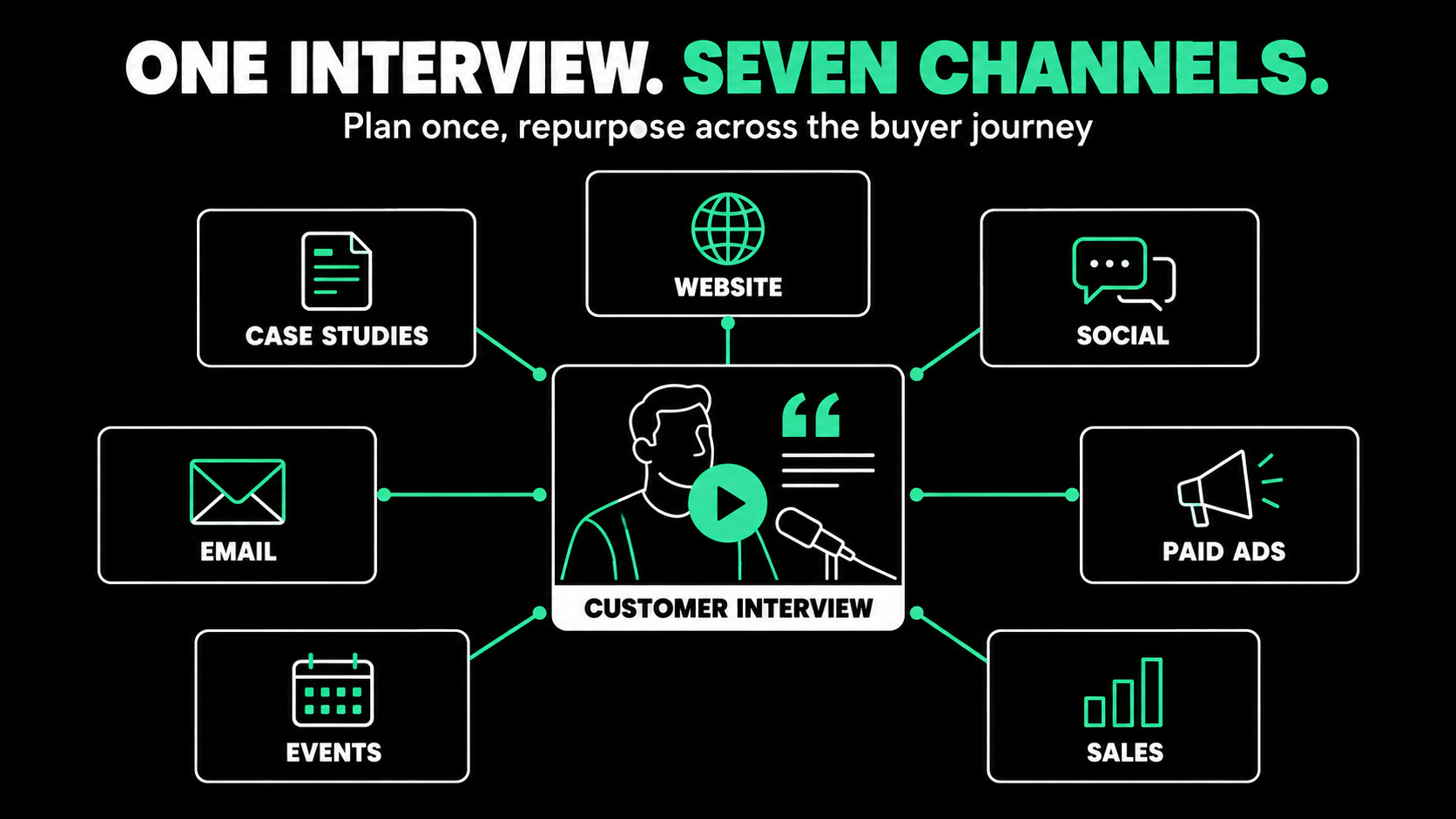
Plan shorter versions early. A main edit might also produce a 30-second overview, proof-point clips, vertical edits, an event version, and sales segments.
Distribute the Video Across the Buyer Journey
A B2B customer success video should not live only on a case study page. Its strongest moments can support several stages of the buyer journey.
Use the main story on relevant industry, solution, and customer pages. Place focused clips on landing pages and give sales versions organized around implementation, integration, adoption, service, or ROI.
Short edits can support paid and organic social. Quotes and stills can strengthen presentations, emails, events, and written case studies. Match each edit to a buyer question rather than posting the same file everywhere.
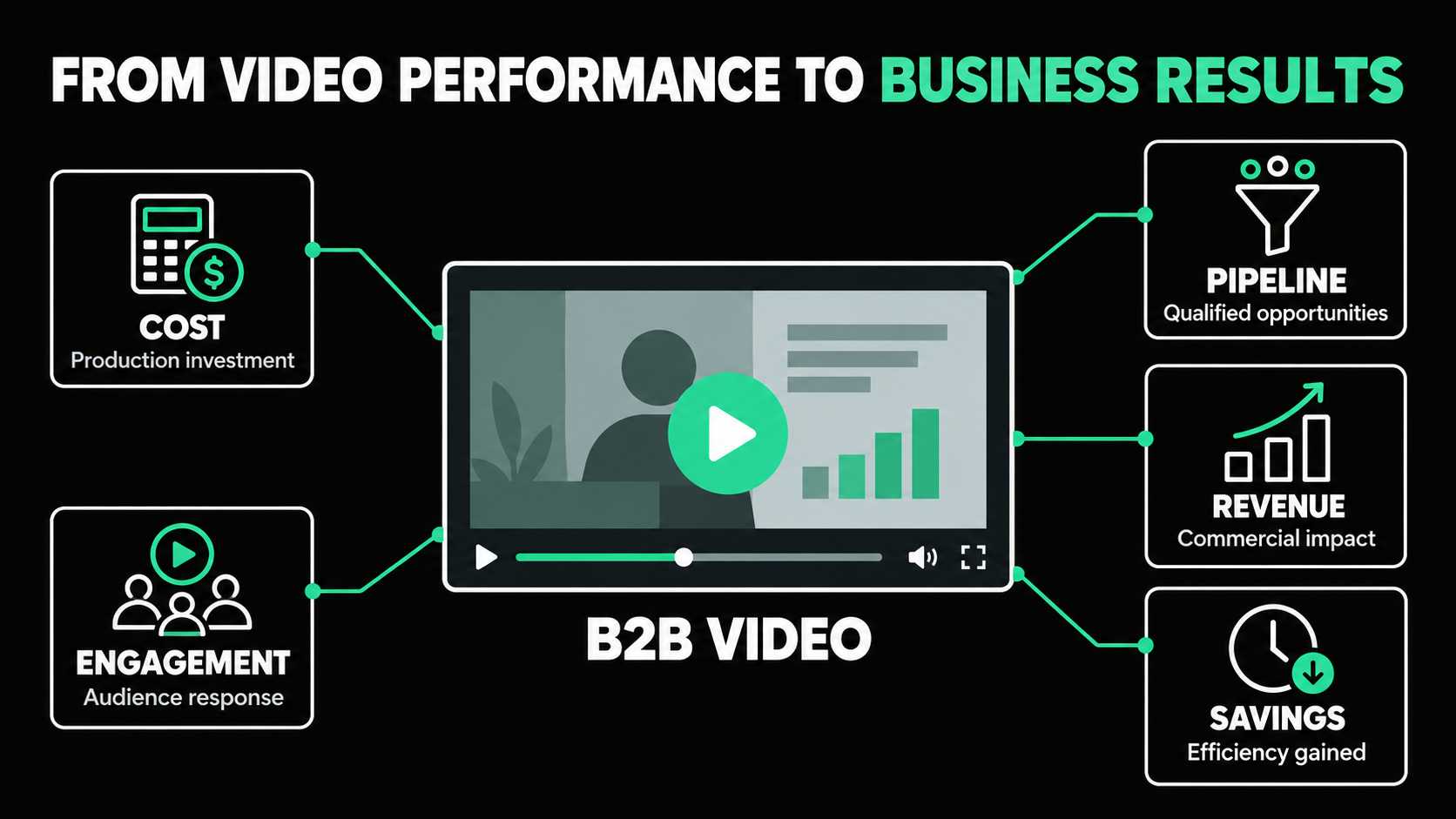
Track performance according to placement. Website engagement, qualified meetings, influenced opportunities, sales usage, and completion rate may all matter, but no single metric applies to every version.
Common Mistakes to Avoid
The most common mistake is making the video about the vendor rather than the customer. Buyers are more interested in the customer’s situation and decision than a long description of company features.
Other problems include choosing a story without a clear business point, scripting the customer too heavily, relying on vague praise, filming before permissions are settled, and waiting until editing to plan distribution.
Another mistake is asking the customer to make unsupported claims. Confirm results and qualifying details before they become central to the story. Credibility is more valuable than an impressive statement that cannot survive review.
How to Create a B2B Testimonial Video That Buyers Trust
Knowing how to create a B2B testimonial video begins with selecting the right proof, not simply finding a customer willing to speak on camera.
Define the buyer question, choose a relevant customer, settle permissions early, and conduct a natural interview built around change. Support the customer’s words with specific visuals and verified evidence, then distribute different versions where they can help buyers make a decision.
A polished video is useful, but polish is not the main source of trust. Specificity, honesty, relevance, and a clear customer perspective are what make the story persuasive.
Have a strong customer story but need help turning it into a credible video buyers will actually use?
Spacebar Visuals helps B2B teams plan and produce customer stories for product marketing, demand generation, sales enablement, events, and brand awareness.
Book a video strategy call to discuss the right customer, story angle, production approach, and distribution plan.
Let’s build your product story together


View Related Resources

How to Create a SaaS Product Video
How to Measure B2B Video Marketing ROI