Animated vs Live Action Video for B2B Companies

.png)
Animated vs Live Action Video for B2B Companies
When comparing animated vs live action video, choose animation when the audience needs to understand an abstract, technical, or invisible idea. Choose live action when the audience needs to trust a person, see a real environment, or feel the human impact of your offer. Use both when credibility and explanation are equally important.
The right format still depends on the video’s objective, audience, distribution plan, and place in the buyer journey. A polished production in the wrong format can weaken a strong message.
This guide explains the practical differences between animation and live action so your team can choose with confidence.
Animated vs Live Action Video: The Key Differences
The decision is not simply about visual taste. Animation and live action solve different communication problems.
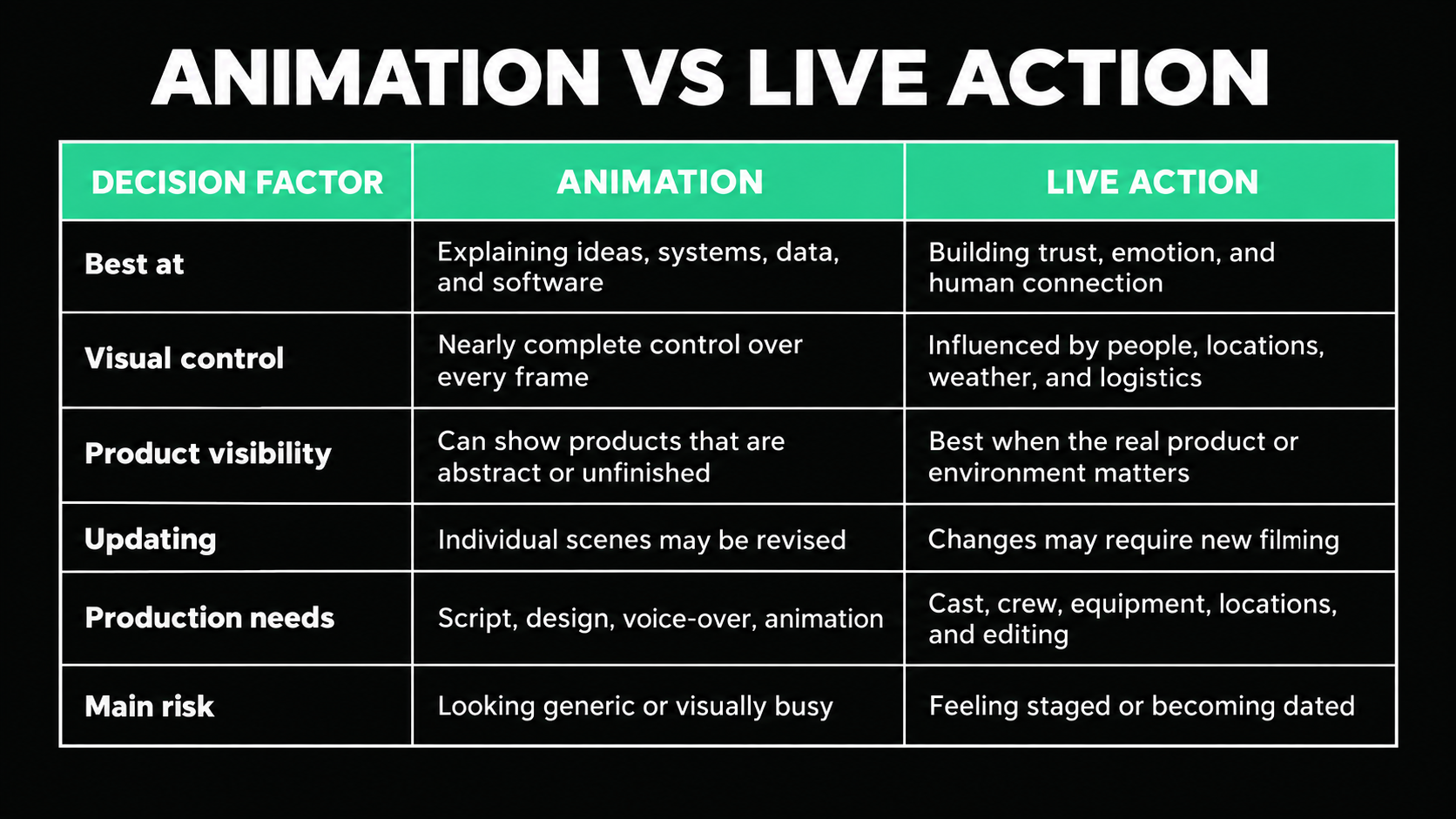
Neither format is inherently more professional. The stronger option is the one that makes the message easier to understand and believe.
When Should a B2B Company Choose Animation?
Choose animated video production when reality cannot show the idea clearly enough.
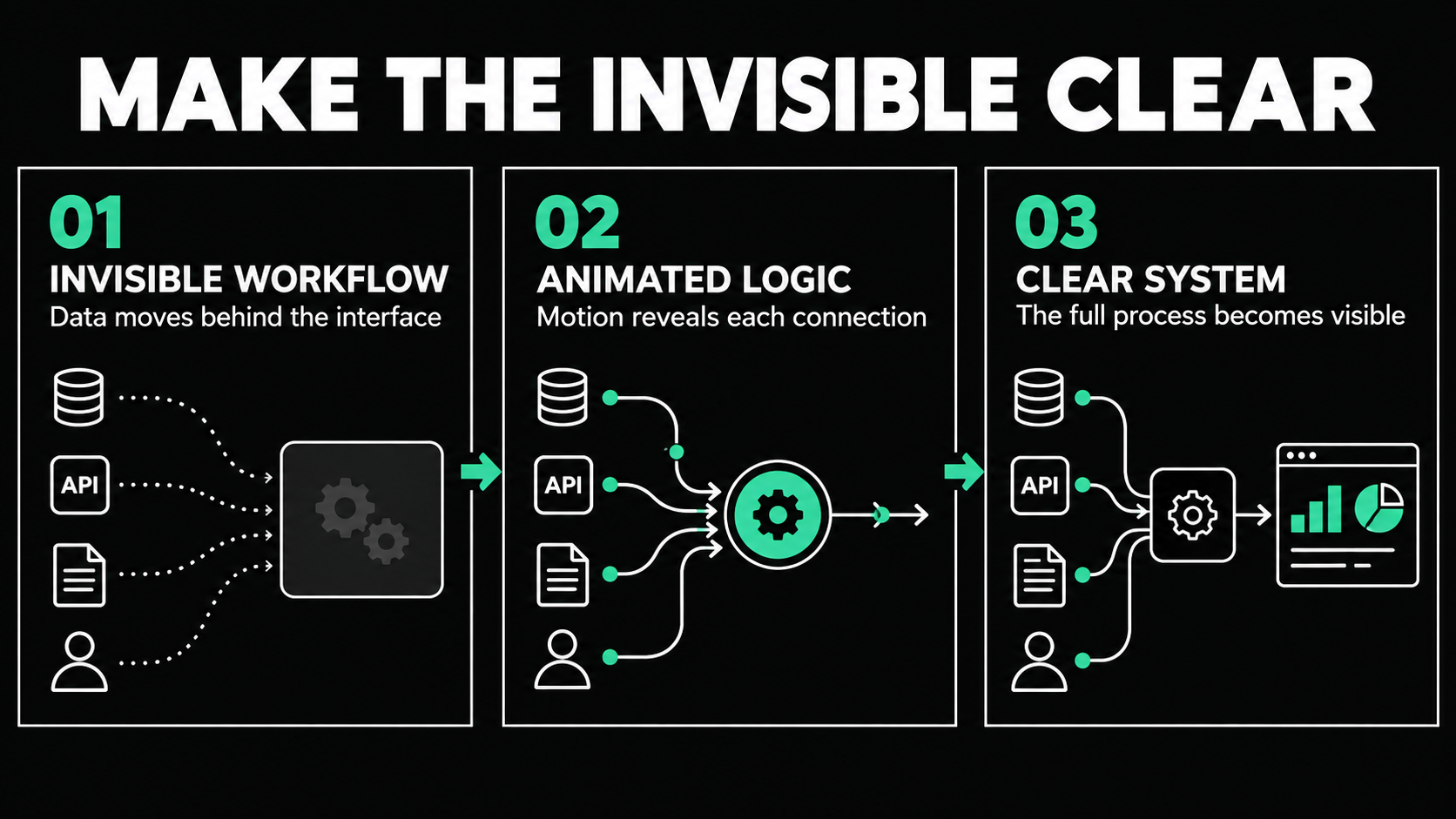
You need to explain an abstract or technical product
Many B2B offers are difficult to film. Cybersecurity platforms, financial infrastructure, data workflows, APIs, and consulting services do not produce obvious visual action.
Animation can turn an invisible process into a clear sequence. A viewer can watch information move between systems, see where a threat is blocked, or understand how several teams use one platform.
For example, a SaaS company explaining automated invoice reconciliation could show data entering from several systems, being checked against rules, and moving into an approval queue. That is more useful than filming someone looking at a laptop.
Your product interface changes often
Literal screen recordings can age quickly. If your product team updates navigation or branding every quarter, a highly detailed walkthrough may have a short useful life.
A stylized interface can communicate the workflow without reproducing every button. This makes the video easier to update and keeps attention on the product’s value rather than its current layout.
Buyers still need enough detail to believe the claim. Remove visual clutter, not substance.
You need precise brand and message control
Animation gives the creative team control over color, composition, movement, and pacing. It can extend an existing brand system into a distinct visual language.
That control is valuable for a launch or campaign where every version must share a consistent visual structure.
You need localization or planned revisions
Animation can simplify localization when planned from the start. Voice-over, text, and selected scenes can be replaced without a new shoot.
However, animation is not automatically easy to revise. A script change can affect timing, voice-over, sound, and every scene that follows. Lock the message before detailed animation begins.
When Should a B2B Company Choose Live Action?
Choose live-action video production when real people or places are part of the proof.
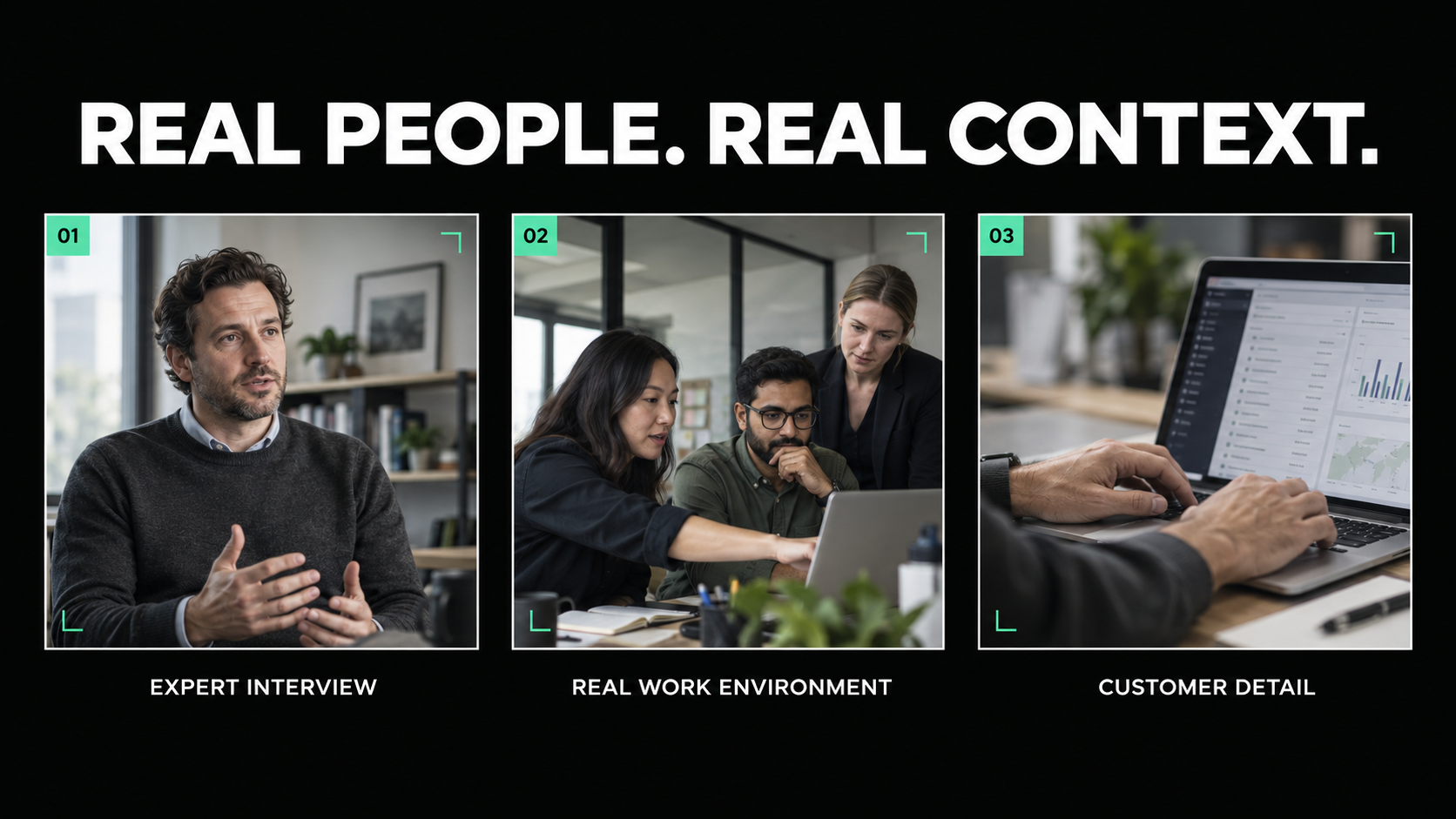
Trust is the main communication goal
B2B purchases often involve risk. Buyers want evidence that the company understands their problem and can support them after the contract is signed.
Seeing a knowledgeable founder, product leader, or customer speak clearly can reduce that distance. Expression and tone carry information animation cannot reproduce in the same way.
This makes live action effective for customer stories, thought leadership, recruitment, event content, and brand films. The speaker still needs something useful to say. An executive reading vague claims does not create trust.
The environment strengthens the claim
Some products make more sense when viewers see where they are used. A manufacturing system, medical device, logistics platform, or workplace service benefits from showing the real setting.
A customer story filmed inside an operating facility can show scale, process, and context that a studio interview cannot.
Your people are part of the differentiation
For consultancies, professional services firms, and founder-led companies, expertise is part of the product. Live action lets prospects meet the people they may eventually work with.
Ask an expert to explain one difficult customer problem or challenge a common assumption. That produces stronger material than a broad company overview.
You want a reusable library of human content
A well-planned shoot can create more than one video. One interview day might produce a main brand story, short expert clips, sales follow-ups, event content, and still photography.
Capture several approved themes, frame shots for multiple aspect ratios, and identify short clips before filming. Repurposing should shape the shoot.
Animated vs Live-Action Explainer Video
For an animated vs live-action explainer video, start by asking what the viewer needs explained.
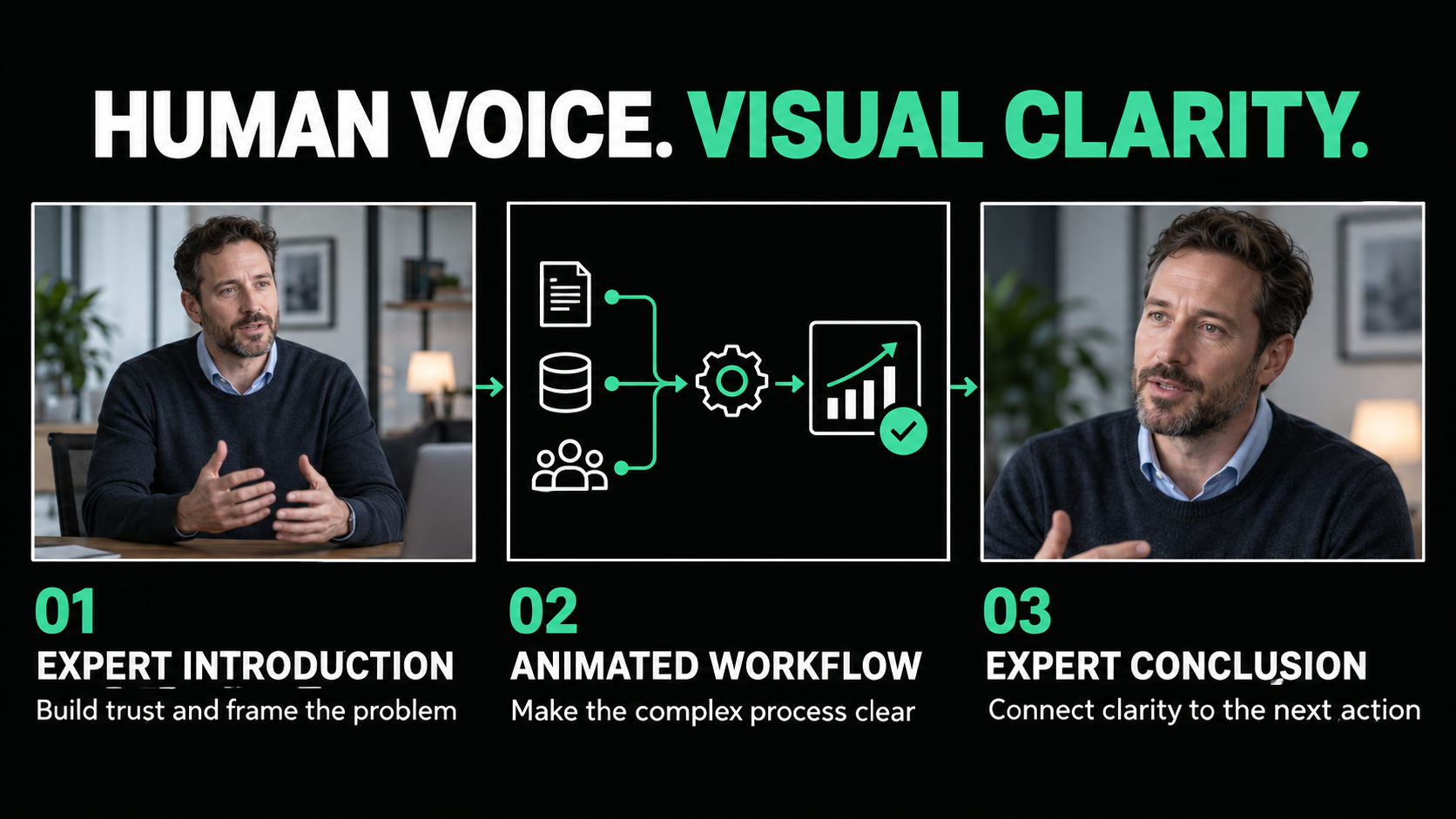
If the challenge is conceptual, animation usually wins. It can reduce a complex process to a controlled visual sequence. If the challenge is credibility, live action is often stronger because a customer or expert can explain the issue from experience.
Consider a B2B software company selling a compliance platform:
- An animated explainer could show how evidence moves from connected systems into a central review process.
- A live-action explainer could feature a compliance leader describing the cost of managing evidence manually.
- A hybrid video could open with that leader, move into animated product logic, and return to the speaker for the conclusion.
A hybrid is often strongest for complex B2B offers. It establishes human authority, then makes the explanation concrete. It may cost more, so each format should have a clear job.
Which Format Costs More?
Neither format is always cheaper. Cost depends on creative complexity and scope.
Animation costs rise with custom illustration, character work, 3D modeling, detailed interface sequences, and runtime. Live-action costs rise with shoot days, locations, crew size, travel, actors, set design, and equipment.
A simple interview filmed in one office may cost less than a fully custom animated video. A multi-location shoot with actors may cost much more than a focused motion-graphics piece.
Compare quotes by scope, not label. Confirm what is included in strategy, scripting, production, editing, captions, revisions, cutdowns, and usage rights. A quote requiring your team to supply the script and logistics is not comparable to a full-service proposal.
Which Format Is Faster to Produce?
Animation avoids shoot logistics, but every frame must be built. Live action may be filmed in one day, but scheduling people and locations can take weeks.
A focused live-action interview can often move quickly if the participants are available. Custom animation may take longer because it passes through script, storyboard, style frames, voice-over, animation, and sound. A complex live-action production can take longer than either.
The most common delay is slow stakeholder feedback. Set one decision-maker, combine comments, and approve the script before production begins.
How the Buyer Journey Should Shape the Choice
Format should follow the buyer’s question at each stage.
Top of funnel: Earn attention and frame the problem
Animation can introduce an idea quickly, while live action can make a brand feel human. Keep the message narrow.
Middle of funnel: Explain and differentiate
Animation clarifies workflows and product value. Live-action experts can address objections. Hybrid videos work when buyers need explanation and confidence.
Bottom of funnel: Reduce perceived risk
Customer stories, implementation explanations, and demonstrations help buying groups reach agreement. Specificity matters more than spectacle.
How to Choose Between Animation and Live Action
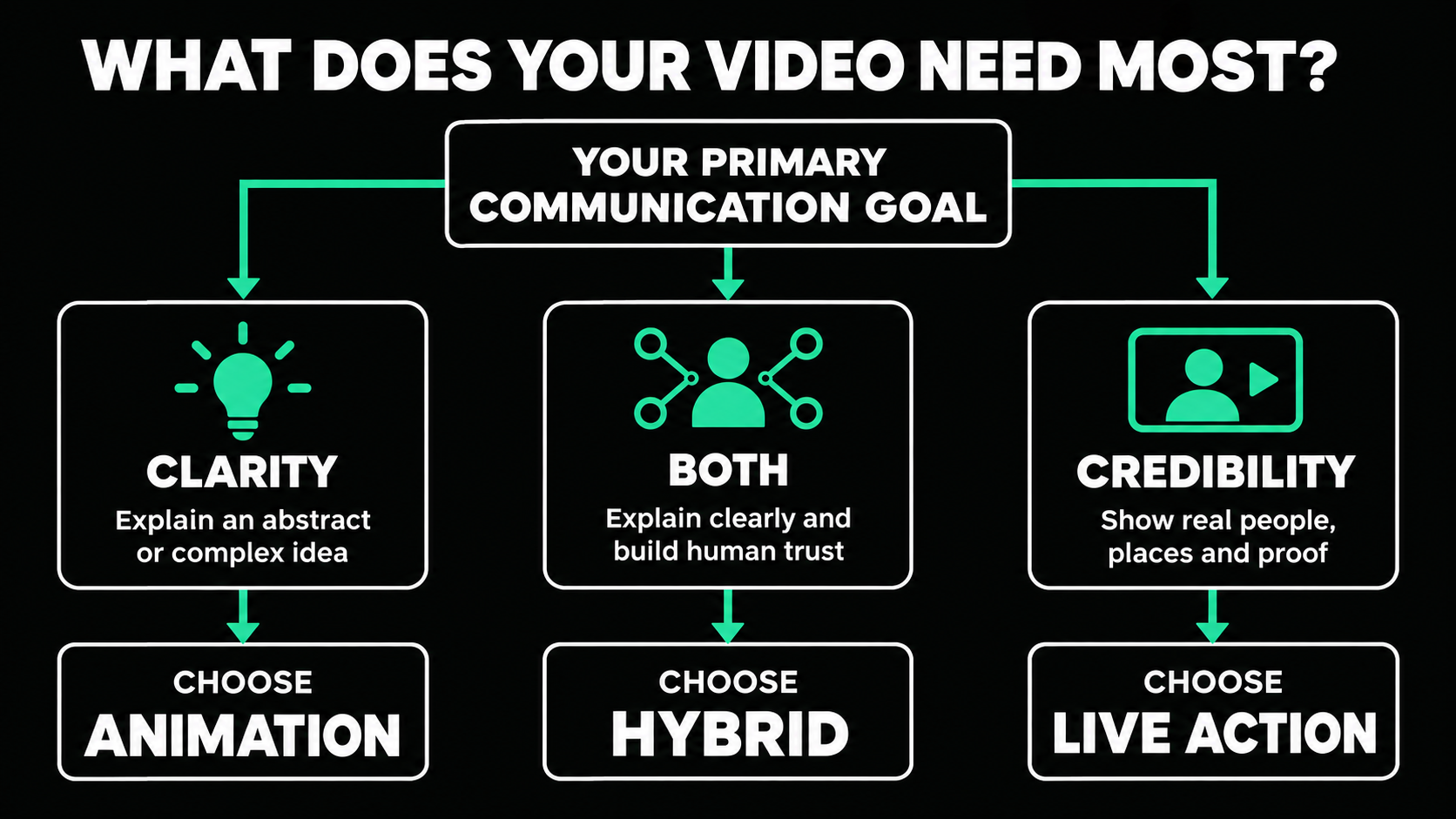
Before selecting a production style, answer these questions:
- What must the viewer understand or believe? Use animation for clarity and live action for human credibility.
- What proof will matter? Decide whether proof comes from a real customer, product workflow, environment, data point, or expert.
- Where will the video be used? A homepage, paid ad, sales email, event screen, and onboarding portal create different viewing conditions.
- How long must it remain current? Consider interface updates, employee changes, office moves, product releases, and rebranding.
- What additional assets are needed? Plan cutdowns, aspect ratios, stills, captions, and alternate calls to action before production.
- Can the format work without sound? Clear visual storytelling and captions make either approach more usable. W3C explains that captions provide the speech and meaningful non-speech audio needed to understand video. It also notes that automatic captions generally require accuracy checks and editing. W3C Web Accessibility Initiative
If the answers point in different directions, use live action where a person or place creates belief and animation where the idea needs visual explanation.
The Best Choice Starts With the Video’s Job
So, should you choose animation or live action for B2B video? Choose animation to make complexity visible. Choose live action to make expertise, evidence, and emotion credible. Choose a hybrid when the story genuinely needs both.
Do not begin with a preferred style. Define the audience, objective, distribution plan, buyer stage, and next action first.
This is the foundation of an effective B2B video strategy. Production quality matters, but usefulness matters first.
Call to action
Not sure which format will best support your marketing or sales goal? Spacebar Visuals helps B2B teams define the strategy, choose the right creative approach, and turn one strong concept into useful assets across channels.
Book a video strategy call to discuss your audience, objective, distribution plan, and production options.
Let’s build your product story together


View Related Resources

Product Demo Video vs. Explainer Video
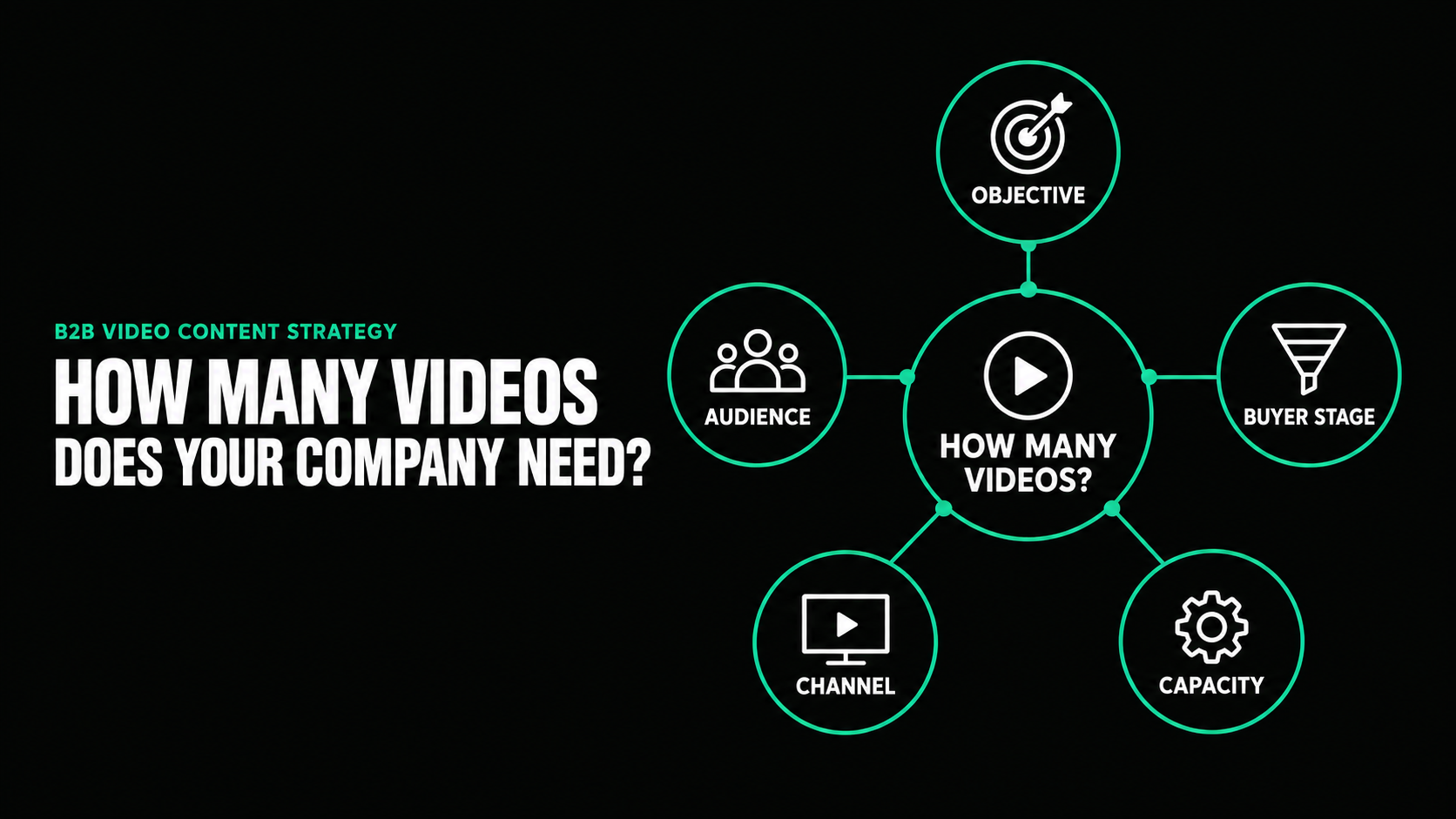
How Many Videos Does Your B2B Company Actually Need?