B2B Video Marketing Strategy: How to Plan for 2027

B2B Video Marketing Strategy: How to Plan for 2027
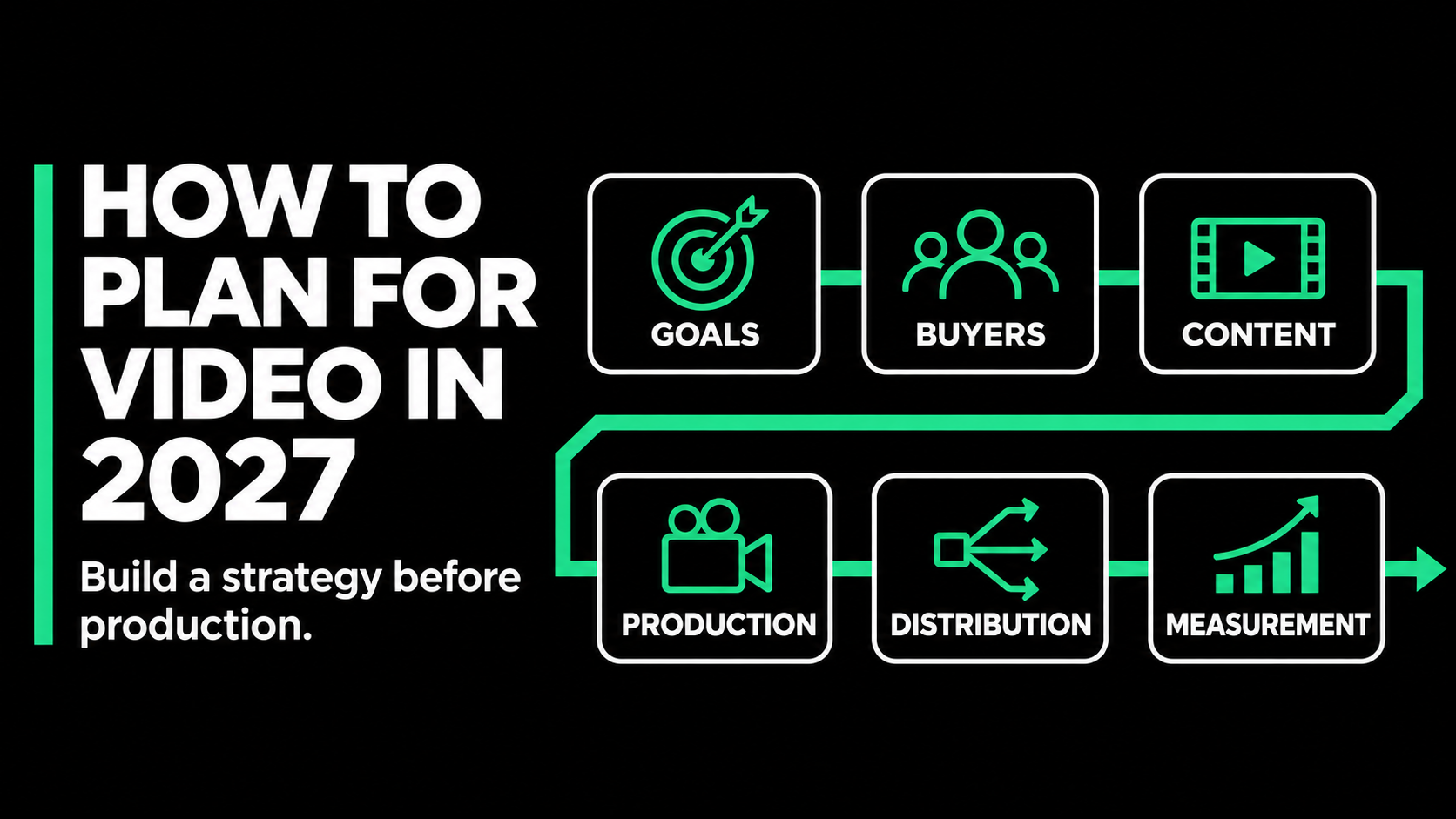
A strong B2B video marketing strategy for 2027 should begin with business priorities, buyer questions, and distribution, not a list of videos your team hopes to produce. Decide which audiences need to understand what, where video can help them move forward, and how each core production will support several channels and stages of the buyer journey.
The practical plan is to produce fewer disconnected videos and build a system of core assets, repeatable formats, planned repurposing, clear ownership, and job-specific measurement.
This matters because demand for video continues to rise while budgets remain under pressure. AI can speed up parts of the workflow, but speed alone does not create a credible point of view, accurate product story, or useful buyer experience.
What Will Shape B2B Video Marketing in 2027?
Wistia's 2026 State of Video Report analyzed more than 13 million videos and surveyed over 900 professionals. It found that companies are creating more video even as almost half keep budgets flat. In-house production and outsourcing are both growing, AI is used most often in pre-production, and LinkedIn has become the primary video channel for many B2B teams.
The Content Marketing Institute's 2027 B2B research adds a warning. While 88% of surveyed marketers use AI-powered content tools, only 17% say AI has improved quality. Effective marketers point more often to relevance, team capability, sales alignment, and channel selection.
The direction for B2B video marketing trends 2027 is clear: production will become faster, but distinction will depend on useful ideas, subject expertise, customer evidence, and creative judgment.
Video will also need to work harder across owned channels. CMI reports that owned media is the leading area where B2B marketers expect increased investment in 2027. For video teams, that means planning for the website, resource center, email, customer education, and sales library, not only social feeds.

Start With Business Priorities, Not a Video Wish List
Before creating a calendar, review the company's 2027 priorities, such as entering a market, launching a product, improving pipeline quality, reducing onboarding friction, increasing adoption, or strengthening the brand.
For each priority, identify where buyer understanding or confidence is missing. Video helps when showing is clearer than describing or several stakeholders need a consistent explanation.
A SaaS integration launch may need an awareness edit, product overview, integration walkthrough, customer proof, sales clip, and onboarding content. These can share one concept while serving different decisions.
Write a one-sentence job for every proposed core video:
Help [specific audience] understand or believe [one important idea], so they are ready to [appropriate next action].
If the sentence contains several audiences, messages, and actions, the scope is too broad.
Map Buyer Questions Across the Funnel
A useful B2B video content strategy covers buyer questions rather than filling a funnel diagram with formats.
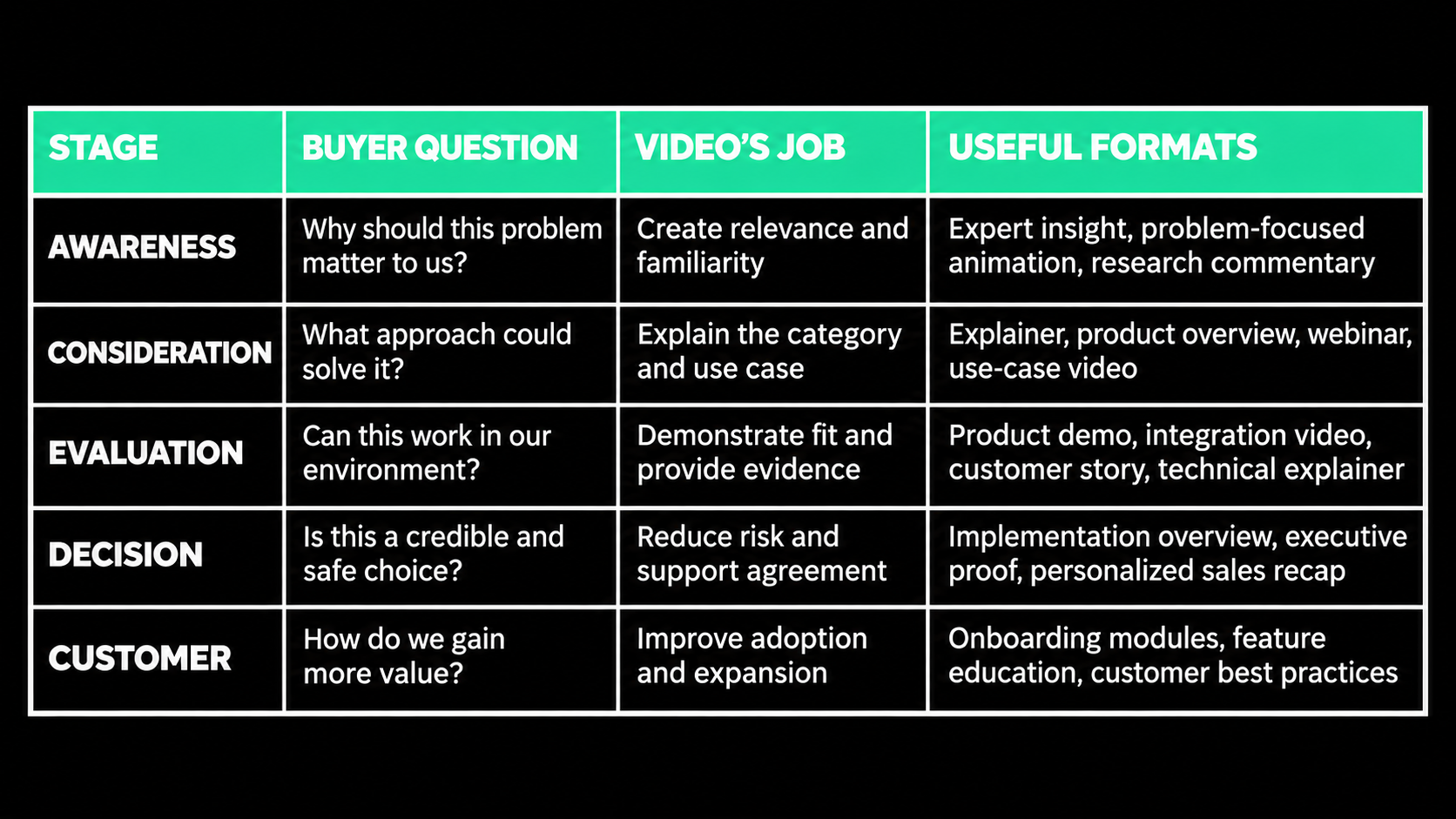
B2B buying groups complicate this map. A champion may need a shareable overview, IT technical evidence, finance an economic case, and an executive the strategic outcome. LinkedIn's research shows video can make a brand easier to understand, share, and evaluate across the group.
Do not produce a separate film for every role by default. Build modular stories and create focused versions where the questions genuinely differ.
Audit What You Already Have
Before planning new production, audit published videos, raw footage, webinars, interviews, product captures, animation files, transcripts, and approved customer quotes.
For each asset, record its audience, message, funnel stage, publication date, usage rights, product accuracy, performance, and potential for reuse. Mark assets that should be kept, updated, repurposed, replaced, or retired.
The audit may reveal a need for a stronger demo, newer customer proof, or shorter sales and social versions rather than another company overview.
The audit should include sales input. Ask which videos representatives actually send, what buyers mention, which objections repeat, and where the current material becomes inaccurate or too general. Those conversations can identify higher-value projects than a brainstorm based only on formats.
Choose a Small Number of Core Productions
A video marketing plan should distinguish between core productions and recurring content.
Core productions are strategic, reusable assets with a longer shelf life, such as product overviews, customer stories, brand films, campaign explainers, or major event pieces.
Recurring content includes product tips, executive commentary, webinar clips, sales videos, and customer education. Templates and a consistent setup make these efficient.
For 2027, choose a manageable number of core ideas that support the most important business priorities. Then identify the recurring content that can extend those ideas throughout the year. This creates continuity without forcing every post into one campaign.
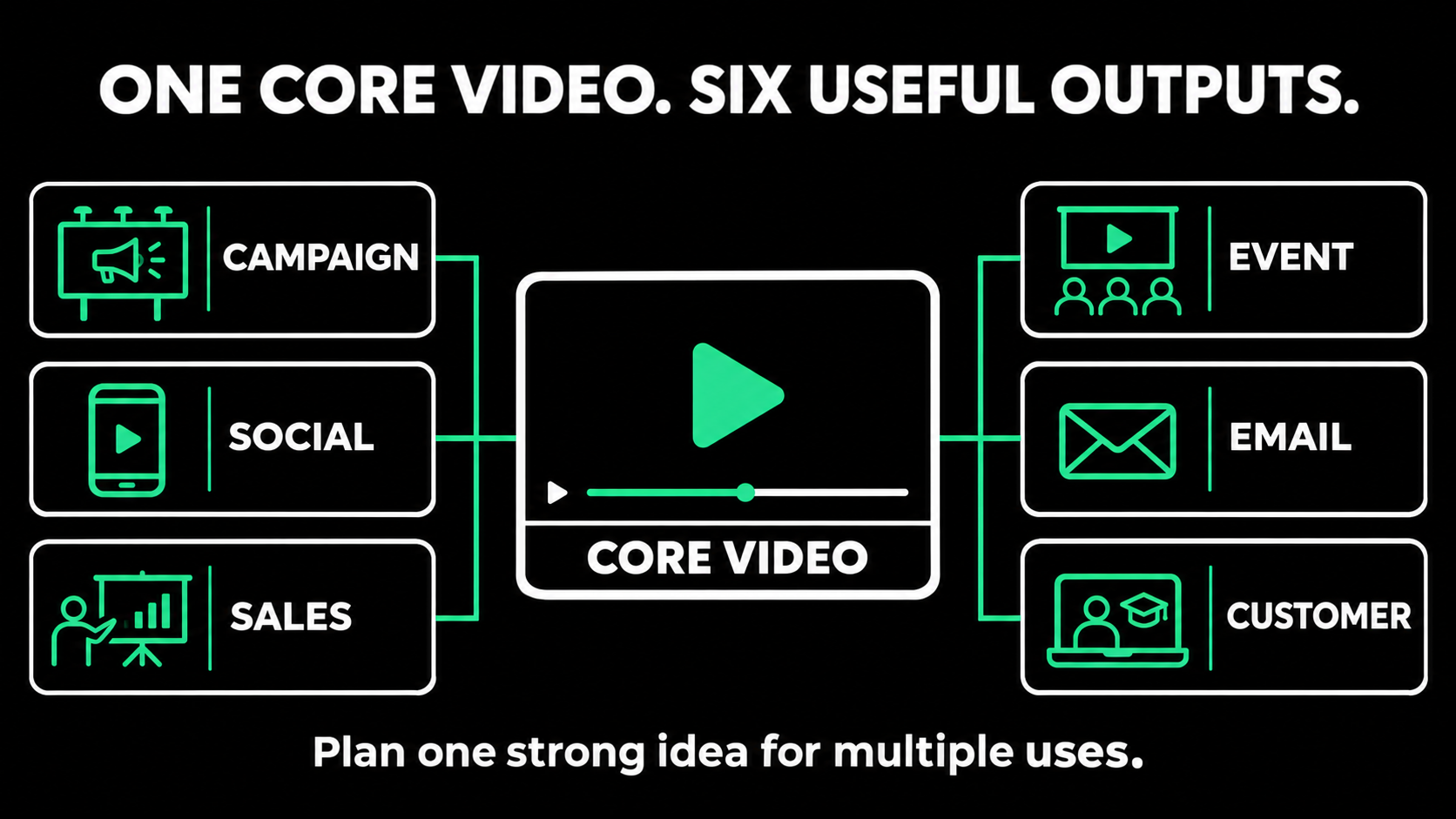
A customer interview can become a complete story, proof clips, sales segments, quotes, a paid edit, stills, and case-study material. Plan these outputs before filming.
Plan Distribution Before Production
Distribution decisions affect the creative work. A homepage video, LinkedIn ad, sales follow-up, silent event screen, and customer email create different viewing conditions.
For every core asset, define its destination, channels, audience, format, action, and owner. Confirm the required aspect ratios, captions, silent version, translations, openings, and calls to action.
Wistia reports that more than half of companies repurpose videos into social clips, and 60% use those clips to direct traffic to their websites. It also found that 76% of teams adjust aspect ratios for different platforms. These are production decisions, not tasks to discover after the master edit is approved.
LinkedIn may remain central, but one platform should not define the strategy. Websites, email lists, sales libraries, webinar archives, and learning centers preserve value after a social post disappears.
Build a Realistic Video Marketing Budget
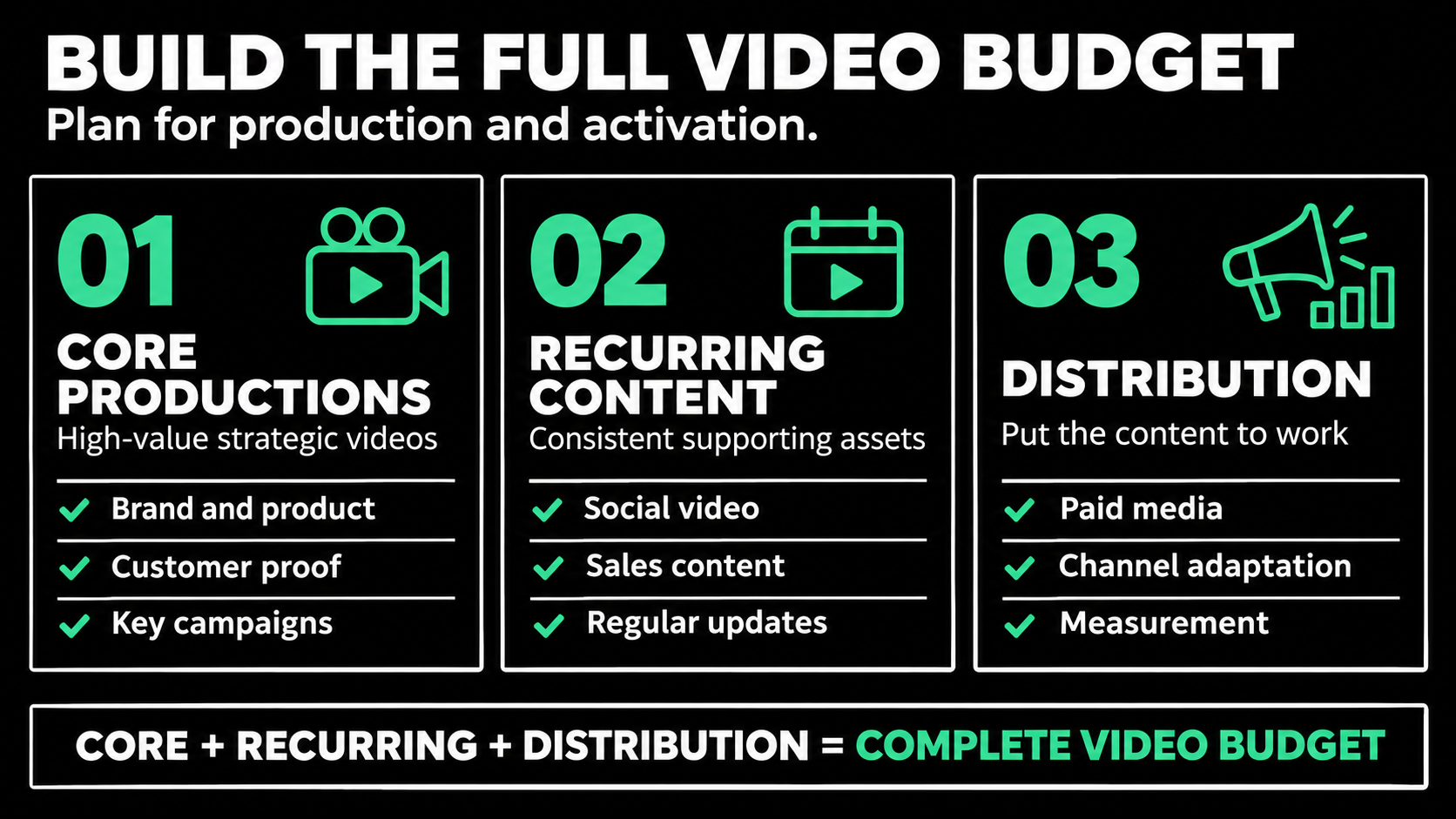
A video marketing budget should cover the full operating system, not only filming and editing.
Budget for strategy, scripting, production, crew, equipment, travel, talent, animation, product capture, music, captions, reviews, versions, hosting, paid distribution, measurement, and updates. Customer stories also require recruitment, coordination, and approval.
Separate the budget into three groups:
- Core productions: High-priority assets tied to launches, campaigns, brand, or customer proof.
- Recurring production: Repeatable internal or retained support for ongoing content.
- Distribution and optimization: Paid promotion, landing pages, testing, hosting, localization, and updates.
Keep contingency for product changes, rescheduled interviews, extra approvals, and new versions. Show leaders what each production supports and what is lost if it is removed.
Do not divide the annual budget evenly across months. Align spending with launches, events, sales cycles, and customer milestones. Production should begin early enough that strategy, approvals, and repurposed versions do not become a last-minute rush.
Decide What Belongs In-House and What Needs Support
The right production model depends on volume, complexity, skills, and risk. Frequent product updates, webinar edits, executive commentary, and simple social content often suit an internal team. Major customer stories, brand campaigns, advanced animation, multi-location shoots, or production surges may justify an agency.
Many teams will benefit from a hybrid structure. Internal marketers own context, expert access, and routine formats. An external partner provides strategy, specialist craft, or extra capacity.
Define ownership before work begins. Name who controls the brief, script, expert access, production, factual review, final approval, distribution, project files, and reporting. Hybrid teams become inefficient when both sides assume the other owns an essential step.
Use AI Where It Improves the Workflow
AI can support research organization, interview preparation, outlines, transcription, captioning, localization, tagging, version planning, and clip discovery.
Use it with review and clear boundaries. Product claims, customer quotations, technical explanations, legal language, and performance conclusions require human verification. AI-generated visual or spoken material should not imply product capabilities, customer experiences, or evidence that does not exist.
The 2027 planning advantage will not come from using AI everywhere. It will come from using it to reduce low-value work while preserving human judgment for positioning, story, trust, and creative quality.
Create a Practical Production Calendar
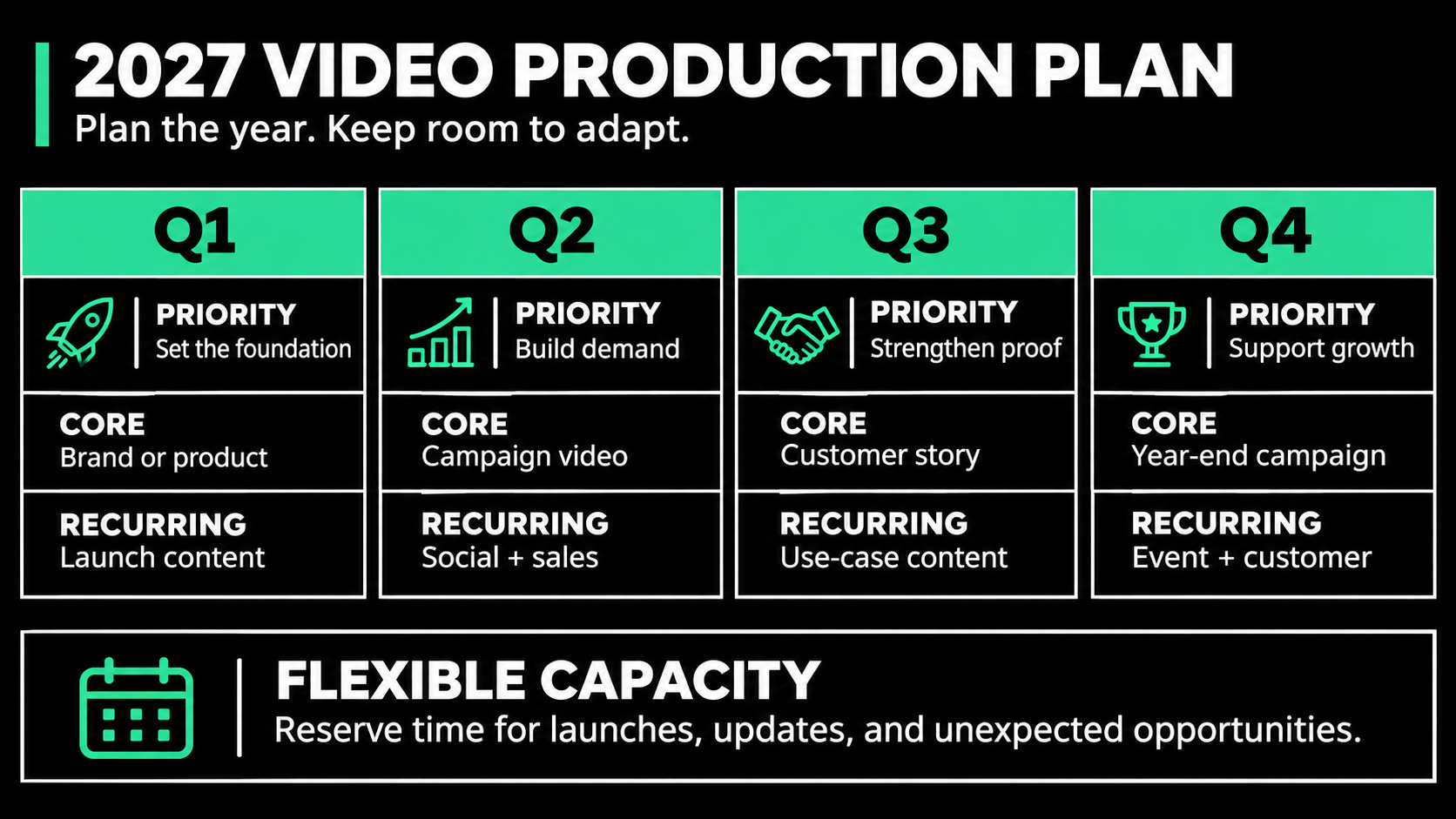
Turn the strategy into a quarterly roadmap of launches, events, campaigns, customer milestones, sales priorities, and product updates. Work backward from publication dates for discovery, approvals, production, and versioning.
Avoid filling every week with unrelated ideas. Give each core production a campaign window and a repurposing plan. A quarterly customer story can support several weeks of social, sales, website, and email content. A webinar can create an on-demand resource, expert clips, a written article, and follow-up messages.
Leave room for responsive content. Industry news, product changes, customer questions, and sales needs cannot all be predicted in an annual calendar. A useful plan protects capacity for them without allowing every urgent request to displace strategic work.
Measure Each Video Against Its Job
Views are not a complete measurement system. Choose metrics based on the audience, placement, and desired action.
Awareness videos may be evaluated through qualified reach, attention, engagement, branded search, and visits from priority accounts. Consideration videos may use completion, return visits, content progression, and demo-page activity. Sales content may be judged through use in active opportunities, stakeholder sharing, meetings, and stage movement. Customer videos may support adoption, feature use, support reduction, retention, or expansion.
Connect video hosting, website analytics, campaign reporting, marketing automation, and CRM data where practical. Attribution will remain imperfect in a long, multi-stakeholder sale, but combined evidence can show which videos reach the right accounts and contribute to useful actions.
Review qualitative evidence as well. Ask sales what they send, ask customers what helped them understand the product, and examine where buyers still become confused. Those insights should influence the next quarter's plan.
Build a System That Can Adapt
The best video production planning for 2027 will not predict every format or platform change. It will create a system that can respond without losing strategic focus.
Begin with business priorities and buyer questions. Audit existing material, choose a limited number of core productions, build recurring formats, plan distribution and repurposing before production, and assign stage-specific measures.
AI, short-form video, and new distribution tools will continue to change how content is produced and discovered. The durable advantage is a clear point of view, credible evidence, strong subject expertise, and a production system that turns each good idea into several useful buyer experiences.
Planning your 2027 video roadmap and unsure which assets to prioritize, what to produce internally, or how to build repurposing into the scope?
Spacebar Visuals helps B2B teams connect video strategy and production to product marketing, demand generation, sales enablement, customer education, events, and brand awareness.
Book a video strategy call to discuss your 2027 priorities, audiences, distribution plan, and production options.
Let’s build your product story together


View Related Resources

Video Content Repurposing for B2B Marketing
How to Write a B2B Video Script That Holds Attention