How Long Does B2B Video Production Take?

Video Production Timeline: How Long Does B2B Video Take?
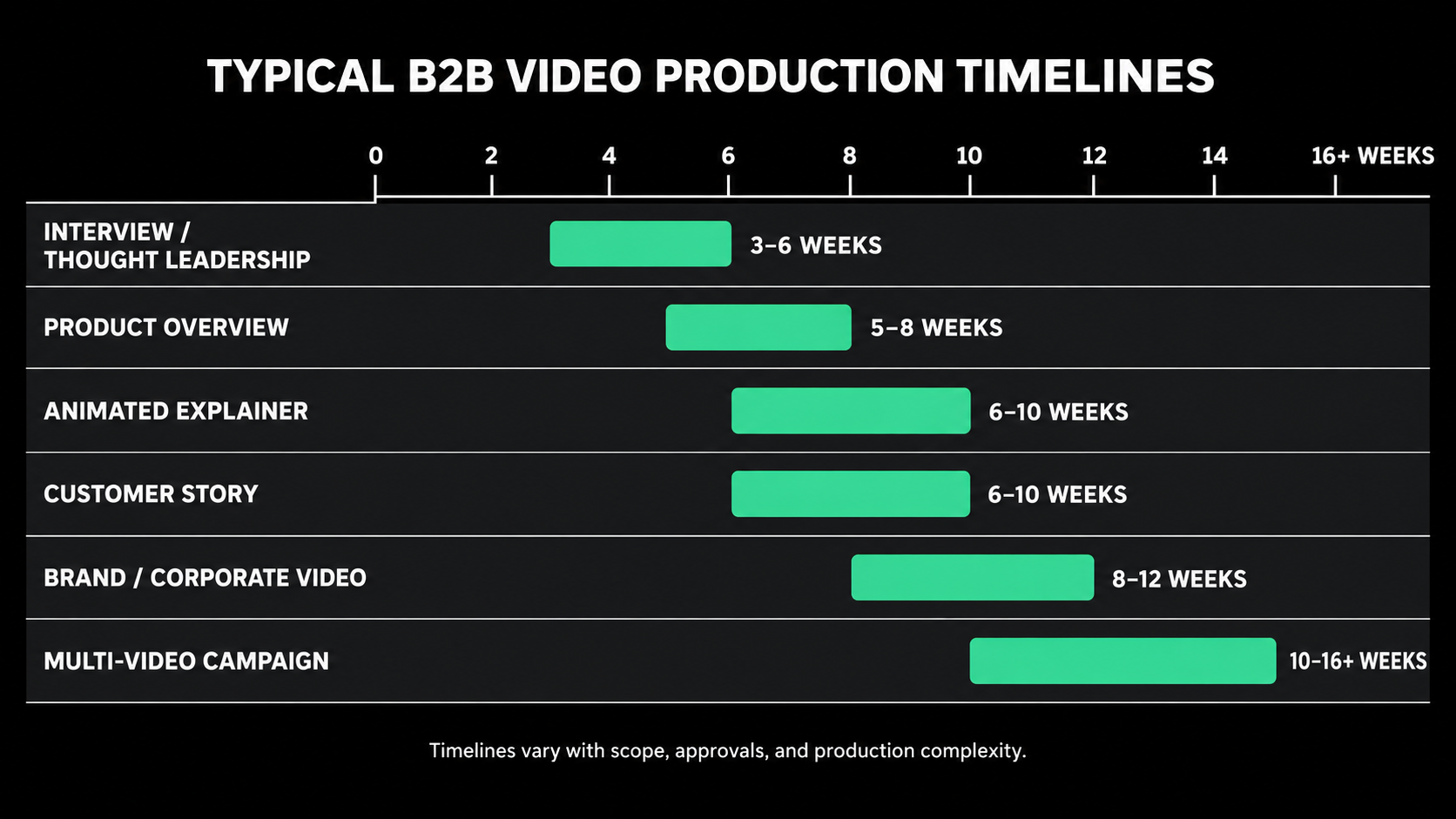
A typical video production timeline for a professionally produced B2B video is six to ten weeks. A simple interview video may take three to six weeks, while a complex animated video, customer story, or multi-video campaign may require eight to twelve weeks or longer.
The exact schedule depends on the creative approach, technical complexity, number of deliverables, stakeholder availability, and speed of feedback.
Most delays do not happen during filming. They happen when the objective is unclear, the script keeps changing, subject-matter experts are unavailable, or feedback arrives from several stakeholders at different times.
The best way to protect your launch date is to define the objective, audience, distribution plan, deliverables, and approval process before production begins.
What Is a Typical B2B Video Production Schedule?
The following ranges provide a practical starting point:
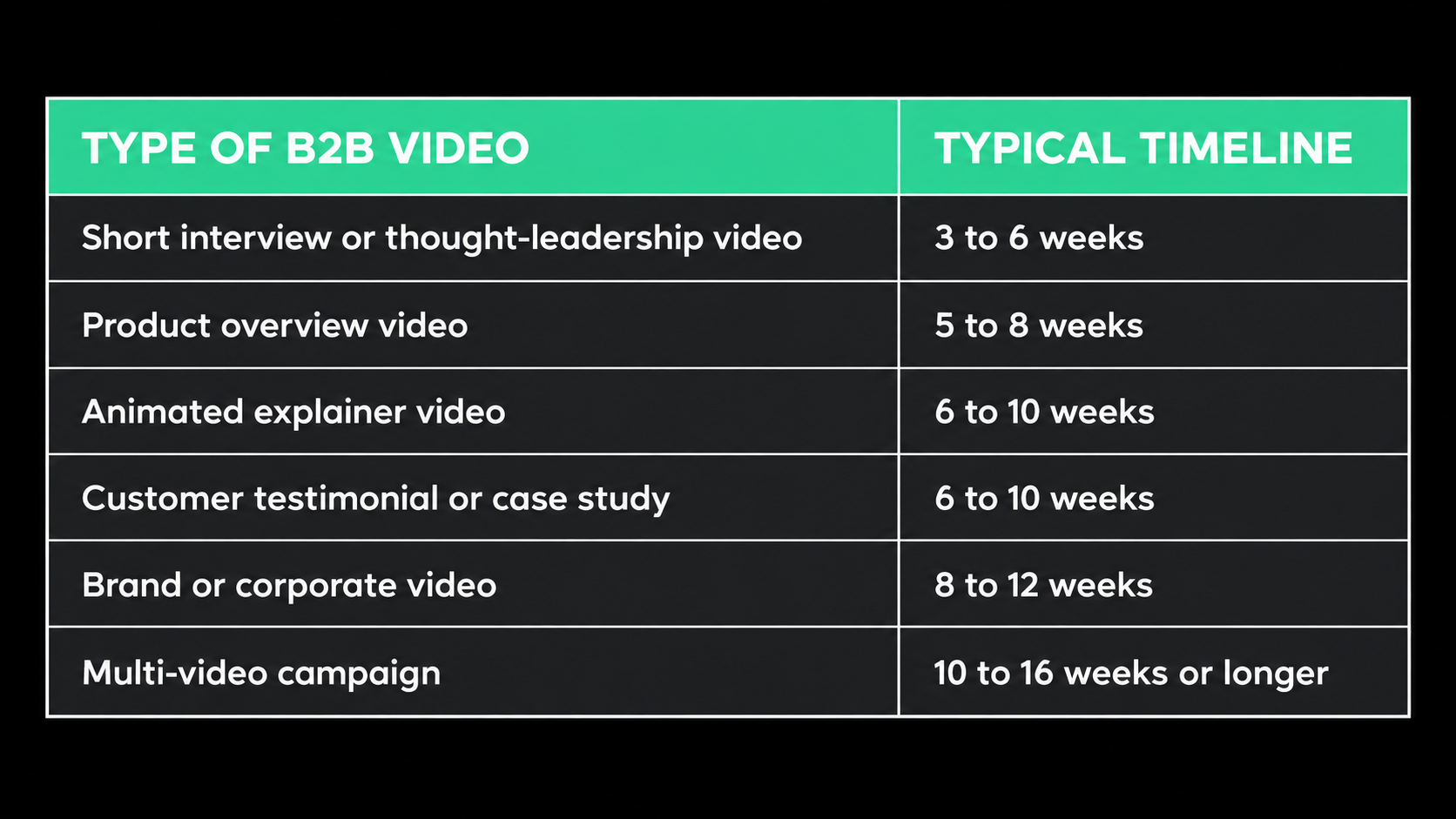
These are planning ranges, not fixed guarantees. A 60-second animated video can take longer than a five-minute interview if every scene requires custom illustration, interface animation, or approval from several departments.
Runtime is only one factor. Strategy, research, coordination, editing, animation, and stakeholder reviews usually have a greater effect on the schedule.
What Are the Main Stages of Video Production?
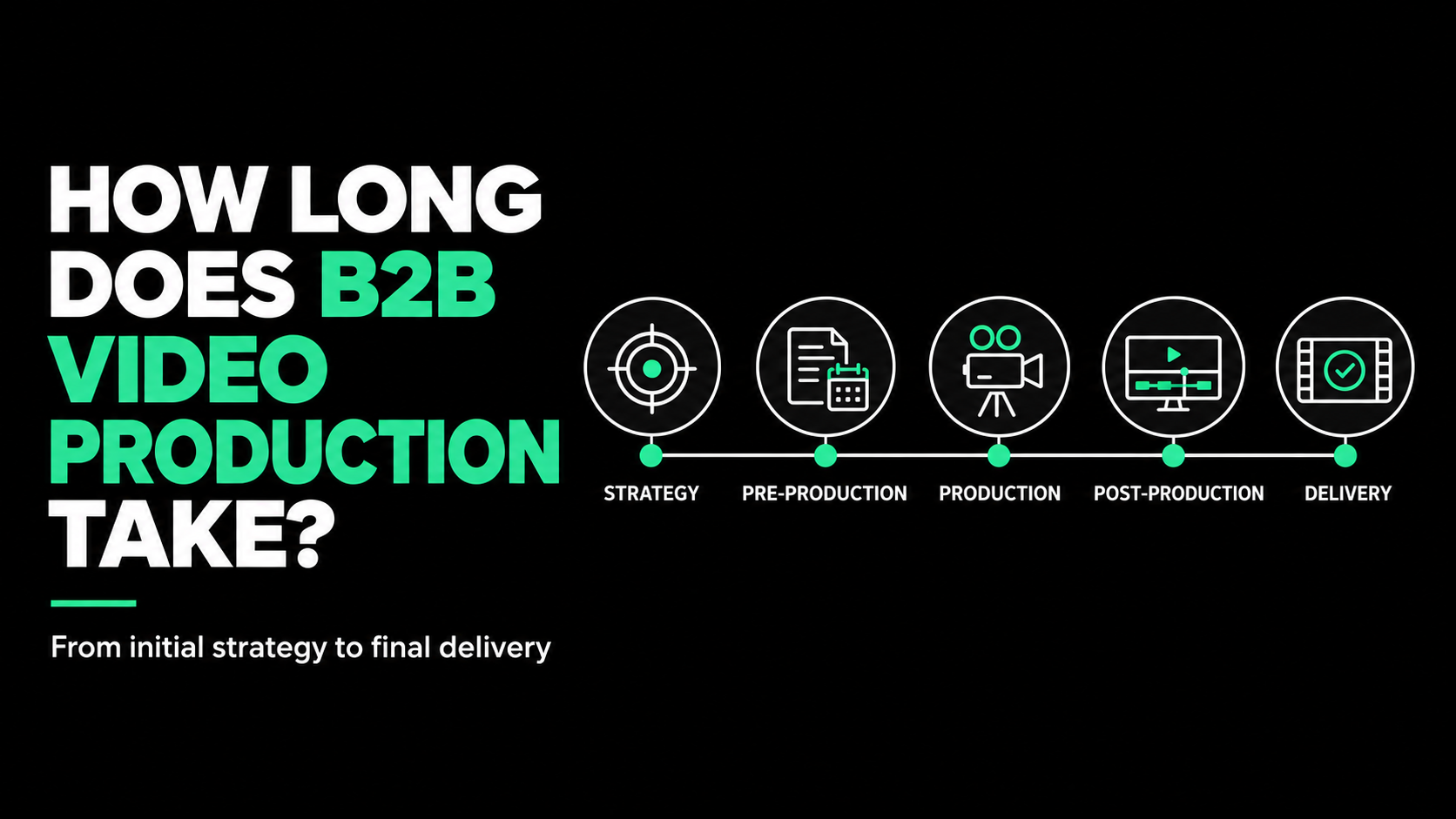
The professional video production process has four stages:
- Strategy and discovery
- Pre-production
- Production
- Post-production and delivery

Each stage depends on decisions made during the stage before it. Entering production with an unclear message often creates delays later, when changes are more expensive.
Stage 1: Strategy and Discovery
Typical timeline: Three days to two weeks
Discovery gives the project a clear business purpose.
The production partner should help define:
- The primary objective
- The intended audience
- The buyer journey stage
- The central message
- The desired viewer action
- The distribution channels
- The required deliverables
For example, a homepage product overview and a paid LinkedIn advertisement may discuss the same product, but they serve different viewers.
A homepage visitor may already be researching the company. A social viewer may have no context and only a few seconds to decide whether the message is relevant.
Discovery may include product demonstrations, stakeholder interviews, customer research, and reviews of existing marketing materials.
This stage moves quickly when the company already has an approved campaign brief. It takes longer when stakeholders are still deciding what the video should achieve.
Stage 2: Pre-Production
Typical timeline: Two to four weeks
Pre-production turns the strategy into a production-ready plan.
It can include:
- Concept development
- Scriptwriting
- Storyboarding
- Visual style development
- Interview preparation
- Casting and location selection
- Product interface planning
- Voice-over selection
- Production scheduling
- Technical or legal review
The script should be approved before detailed storyboarding, animation, or filming begins.
Changing one sentence during script review is simple. Changing the same message after filming may require another recording. Changing it after animation may require rebuilding several scenes.
A storyboard shows how the script will appear visually. For animation, it may define illustrations, transitions, interface screens, and text treatments. For live action, it may show camera angles, locations, supporting footage, and graphics.
Approving both the script and storyboard helps stakeholders understand the direction before expensive production work begins.
Stage 3: Production
Typical timeline: One day to two weeks
Production is when the team captures or creates the main visual and audio material.
For live-action video, this may include interviews, product demonstrations, workplace scenes, or scripted performances.
Filming itself may take only one or two days, but scheduling can take longer. Executives, customers, locations, crew members, and equipment must be available at the same time. Travel, weather, and location permissions may also affect the schedule.
For animated projects, production includes creating illustrations, interface screens, transitions, and motion graphics. Every scene must be designed and animated, so the production stage may take several weeks.
If a software interface is likely to change soon, decide whether to record the current product or create a simplified representation that will remain useful after future updates.
Stage 4: Post-Production and Delivery
Typical timeline: Two to five weeks
Post-production turns the material into a finished video.
It may include:
- Editing
- Animation and motion graphics
- Color correction
- Sound mixing
- Music licensing
- Voice-over editing
- Captions
- Review rounds
- Final exports
The first edit is rarely the final version. The video production schedule should allow stakeholders to review the draft, consolidate their feedback, and give the production team enough time to complete revisions.
Accessibility should also be planned before delivery. The W3C recommends addressing captions, transcripts, and descriptions as part of the media workflow rather than adding them at the last minute. W3C guidance on planning accessible media
Final files may include a widescreen master, vertical or square cutdowns, captioned versions, sales presentation clips, and silent event files.
What Can Extend a Corporate Video Production Timeline?
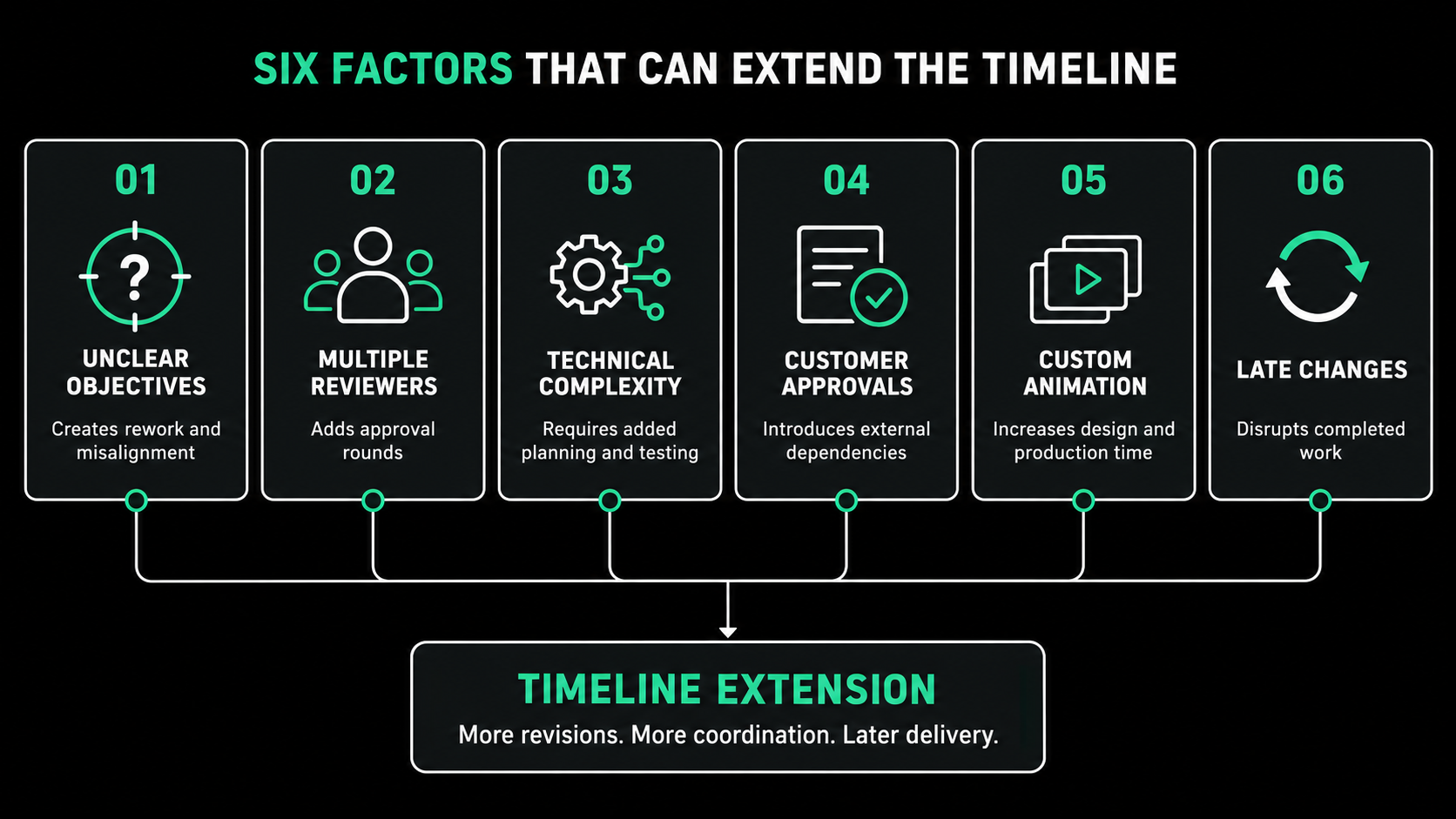
Several factors can make a corporate video production timeline longer.
Unclear objectives or too many audiences
If stakeholders disagree about whether the video is for brand awareness, product education, or lead generation, every creative decision becomes harder.
A video that tries to address executives, technical evaluators, users, and customers can also become crowded. Separate videos are often clearer and easier to approve.
Several reviewers
B2B projects may require input from marketing, product, sales, legal, compliance, and leadership.
The schedule expands when each department reviews separately or raises new questions after an earlier stage has already been approved.
Technical subject matter
Specialized products require research and input from subject-matter experts. Technical claims may also require legal, security, or compliance review.
Customer participation
Customer stories depend on external schedules. The customer may need to approve questions, branding, claims, and the final edit.
Custom animation and multiple versions
Original illustration, 3D visualization, different languages, aspect ratios, and alternative calls to action add production and review time.
Late changes
Changes to approved scripts, products, speakers, or locations can affect several later stages. Even a small message change may require new narration, graphics, or editing.
How Can You Keep Video Production on Schedule?
A faster B2B video production process and timeline depends on clear ownership and timely decisions.
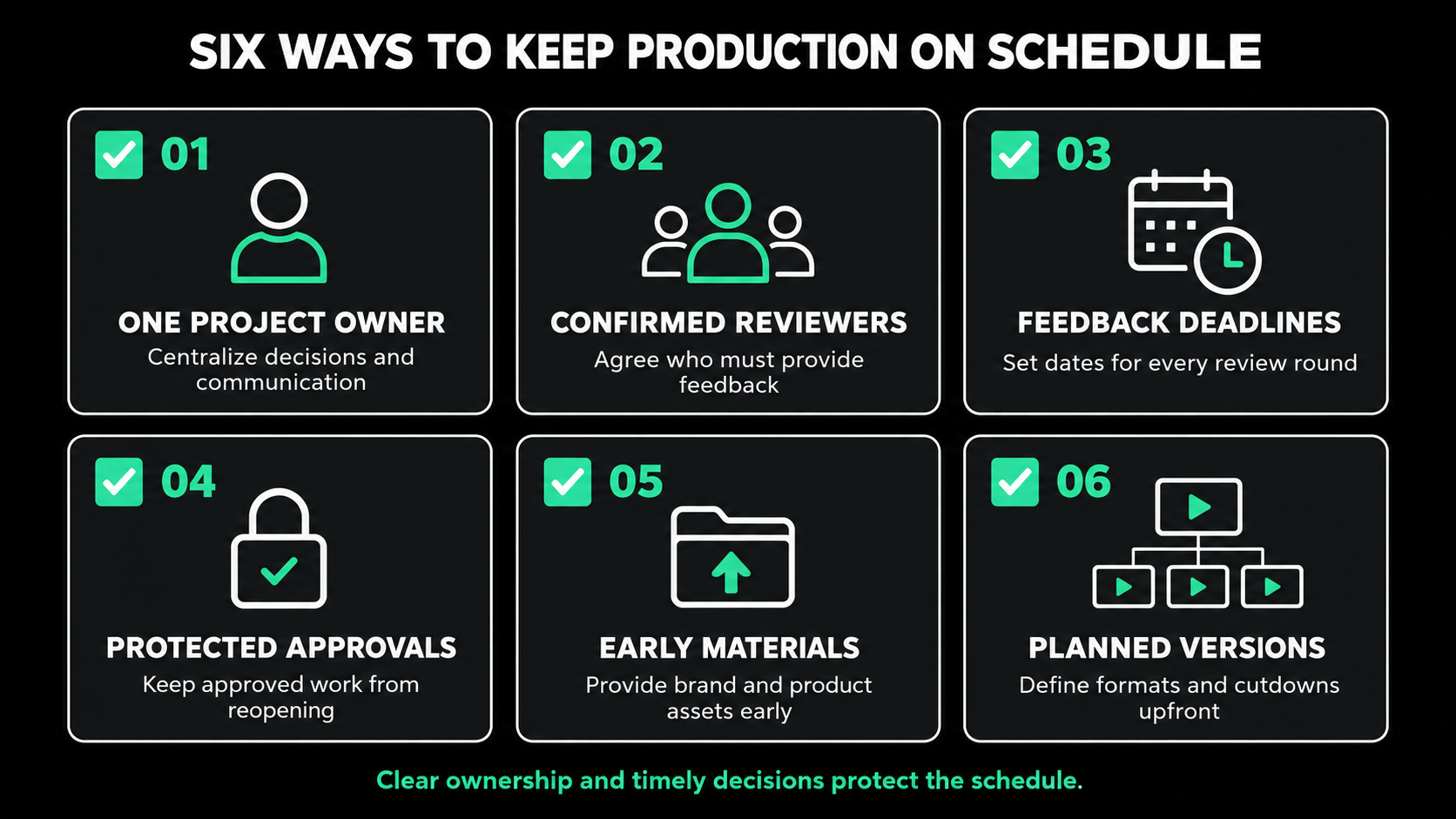
Appoint one project owner
One person should collect stakeholder comments, resolve conflicting requests, and send one approved set of feedback to the production partner.
Confirm reviewers at the beginning
Identify who must approve the concept, script, storyboard, first edit, and final delivery. Avoid introducing new reviewers late in the project.
Set feedback deadlines
A revision scheduled for two days can become a two-week delay when reviewers are not given a clear deadline.
Protect approved stages
Once the script is approved, avoid reopening the full message during editing. Save unrelated ideas for a future video.
Provide materials early
Share brand guidelines, logos, product access, screenshots, technical documentation, campaign information, and previous videos at the start.
Plan versions before production
If you need paid advertisements, social clips, event versions, and sales content, define them before filming or animation begins.
Wistia’s 2026 research found that more than half of companies repurpose videos into social clips, while 76% adjust aspect ratios for different platforms. Planning those versions early is more efficient than adding them after the master video is finished. Wistia’s 2026 State of Video Report
Can Video Production Be Completed in Three or Four Weeks?
It can, but only when the scope is controlled.
A shorter timeline may be realistic when:
- The objective and audience are approved
- The script is short and focused
- One person controls feedback
- The production style is simple
- Speakers and locations are available
- Deliverables and revisions are limited
An accelerated schedule is less suitable for a complex brand film, several locations, customer interviews, custom 3D animation, or extensive legal review.
Reducing the number of locations, scenes, reviewers, and deliverables can save time without weakening the central message.
Cutting strategy, script development, technical accuracy, or sound quality creates greater risk. A fast production provides little value if the final video is unclear or inaccurate.
Remember to Schedule Distribution
The timeline should not end when the master video is approved.
Allow time to prepare:
- Website or landing-page placement
- Paid campaign versions
- Organic social posts
- Email content
- Sales materials
- Event or presentation versions
- Tracking and analytics
Producing a polished video without preparing its distribution can lead to a weak launch.
One concept can support several coordinated assets, but every version should have a clear channel, audience, and purpose.
A Reliable Timeline Starts With Clear Decisions
A realistic video production timeline should cover strategy, scripting, production, editing, reviews, accessibility, final versions, and distribution.
Most importantly, do not begin production until the objective, audience, message, and desired action are clear.
Spacebar Visuals helps B2B companies plan and produce videos for product marketing, demand generation, sales enablement, customer education, events, and brand awareness. We have worked with more than 100 companies, including ISO, Rho, and Cloaked.
If you are planning an upcoming campaign or launch, book a video strategy call with Spacebar Visuals to discuss your scope, deadline, and production needs.
Let’s build your product story together


View Related Resources

Product Demo Video vs. Explainer Video
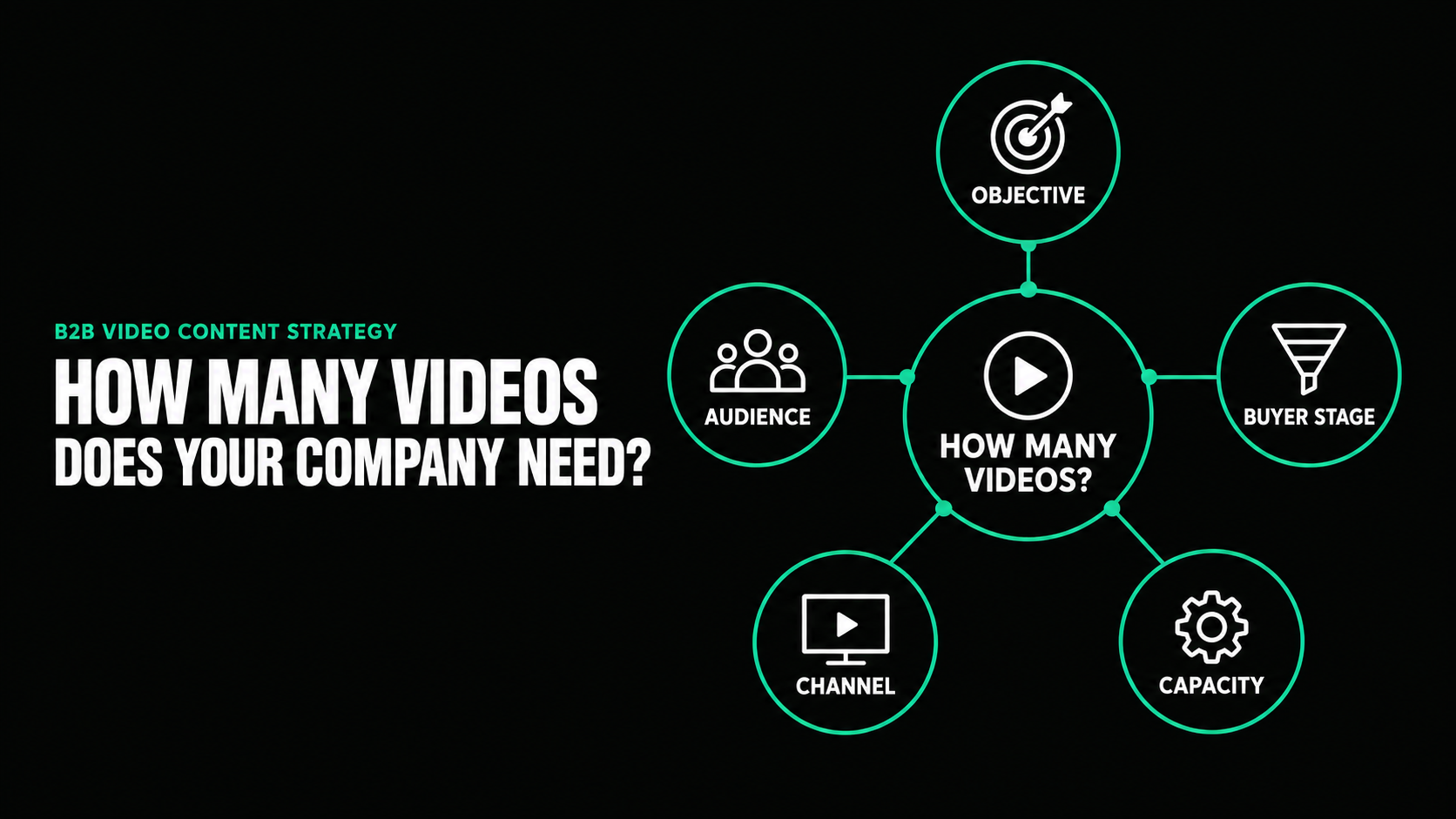
How Many Videos Does Your B2B Company Actually Need?
.png)